




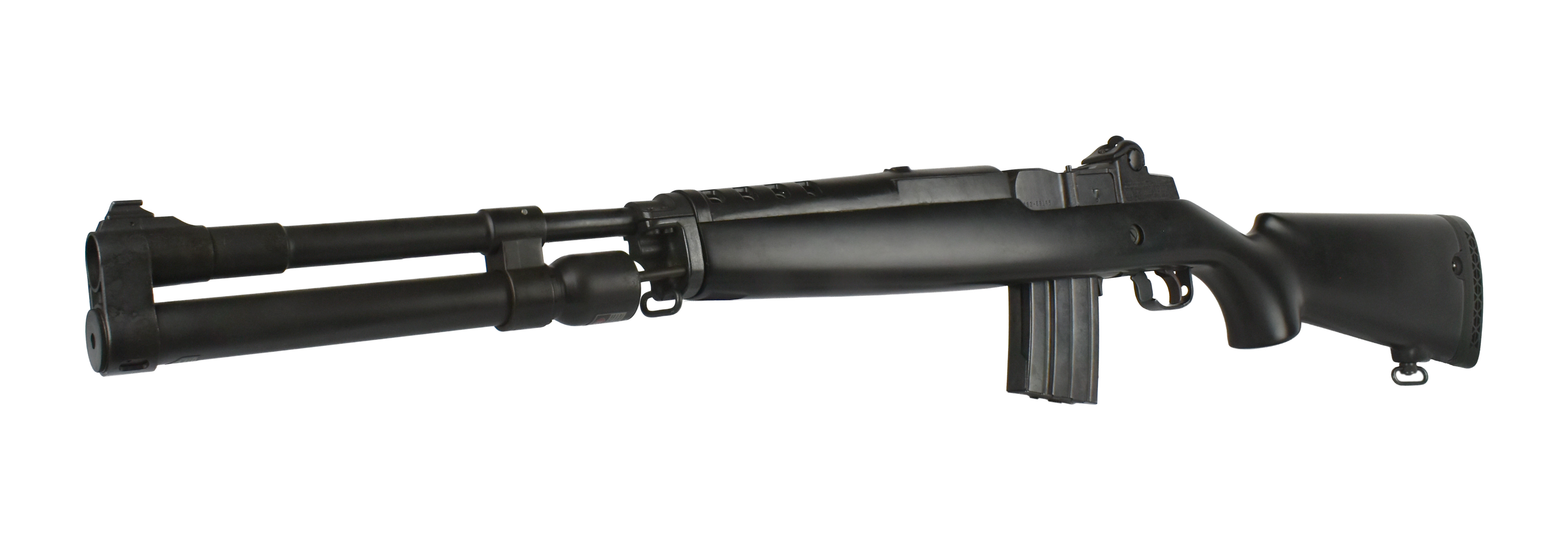
The LPC Model 14 is an integrated red laser specifically for the Ruger Mini-14, known to be made as early as 1981, and possibly earlier. This predates the AR-15/M16 version of the laser, and is the second laser made by LPC (following the Model 7 for the Colt Trooper).
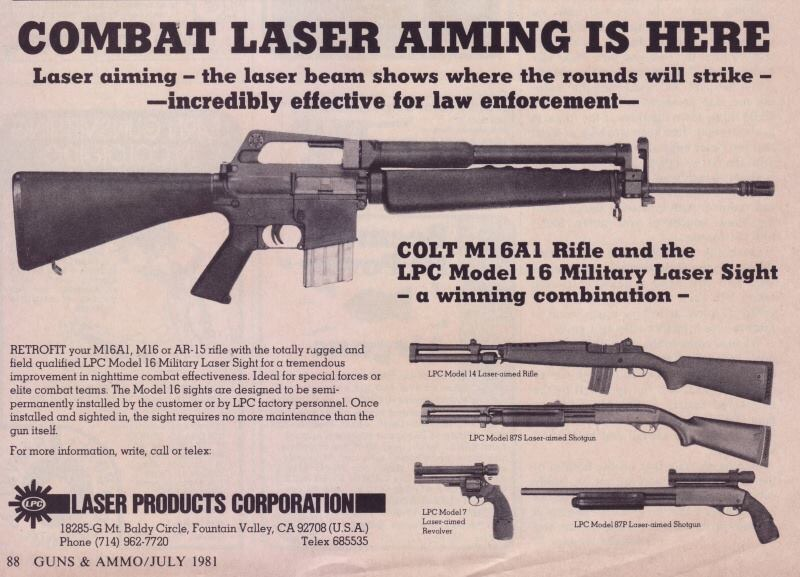
A near identical version was implemented on the Ruger AC-556 series of rifles as the LPC Model 55 and Model 56.
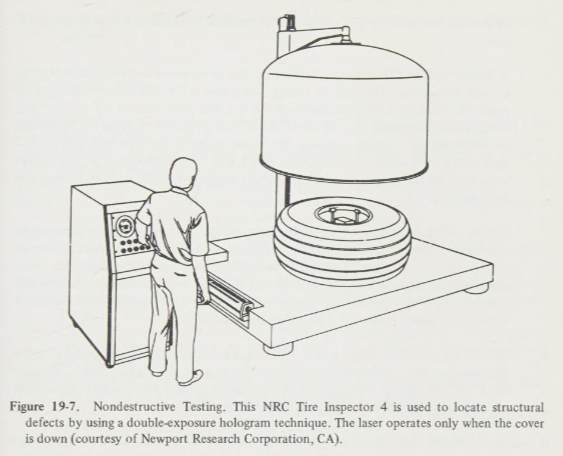
During production, Laser Products Corporation was located in Fountain Valley, California. Started in 1979, LPC was an offshoot of Newport Corporation who made laboratory equipment, and was formed by John Matthews[…]

[…] after Newport Corp investors questioned why the business was playing around with lasers. While NRC was quite diverse with their laser-related equipment, firearms were perhaps seen as a futile market to explore.
The inventor of the family of lasers was Edward C. Reynolds Jr, shown below with the Model 7, which uses the same laser module.
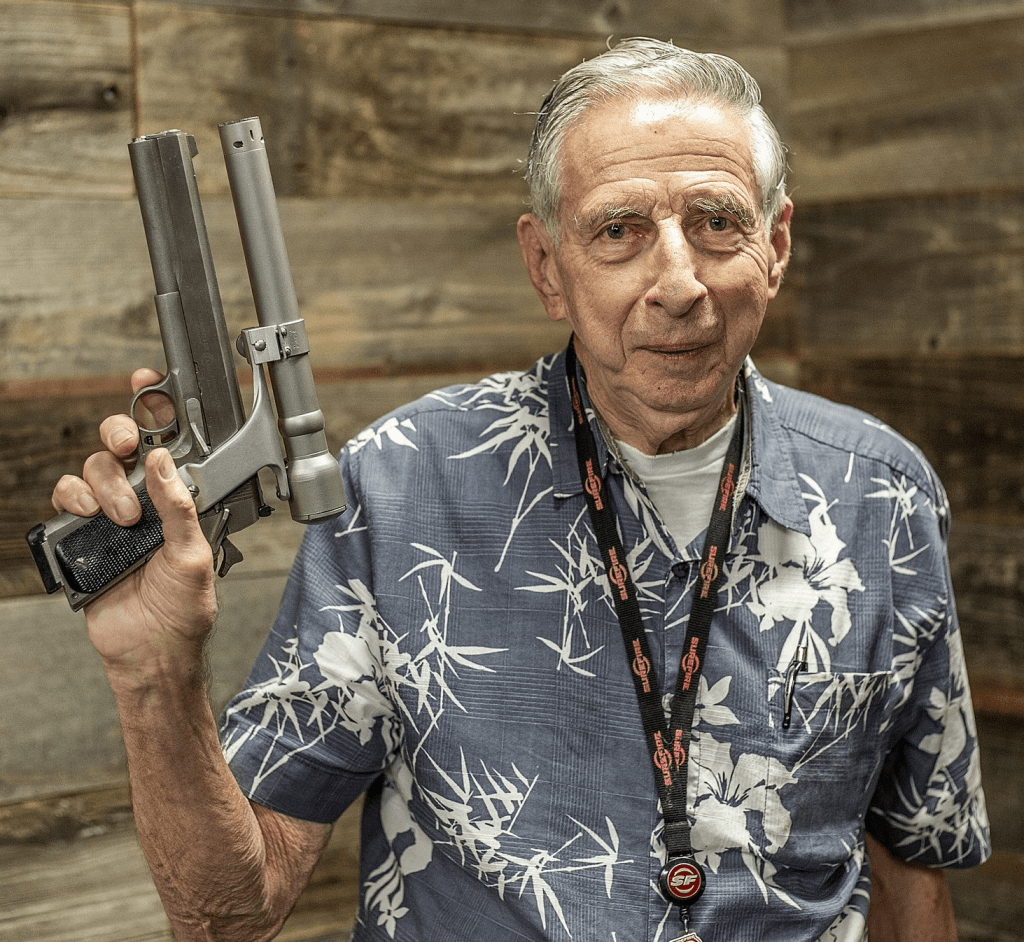
The Model 7 itself was very briefly a product branded under the Newport Research company name before being later sold by LPC. The first lasers were fabricated externally by Hughes Aircraft Company.
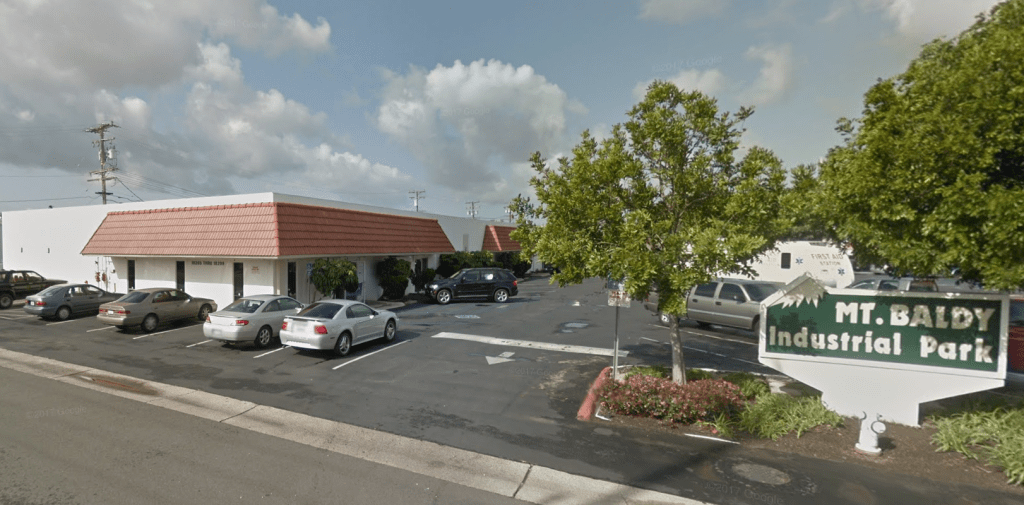
Photo from 2011 of the business park where LPC was originally located
The price of a typical Mini-14 was around $380 at the time, while the laser-enabled product sold for $3,475–$3,895, and initially only to law enforcement agencies. On the second-hand market they could be found for closer to $1,500. There was the Model 14, and also the 14A which appears to be an improved version. I have also seen a spec sheet calling it the ‘Model 1400’, which appears to be the first designation given.
These were most famously used by the Los Angeles Police Department to provide security during the 1984 Olympics. Sources differ on whether the LAPD SWAT Team acquired shotguns with lasers, AR-15’s with lasers, or Mini-14’s with lasers – chances are they acquired all of them! It is often alleged that fewer than 50 of the Model 14’s were ever made, but I have been unable to verify this, and many make similar claims to other models so it is possible that there is confusion.
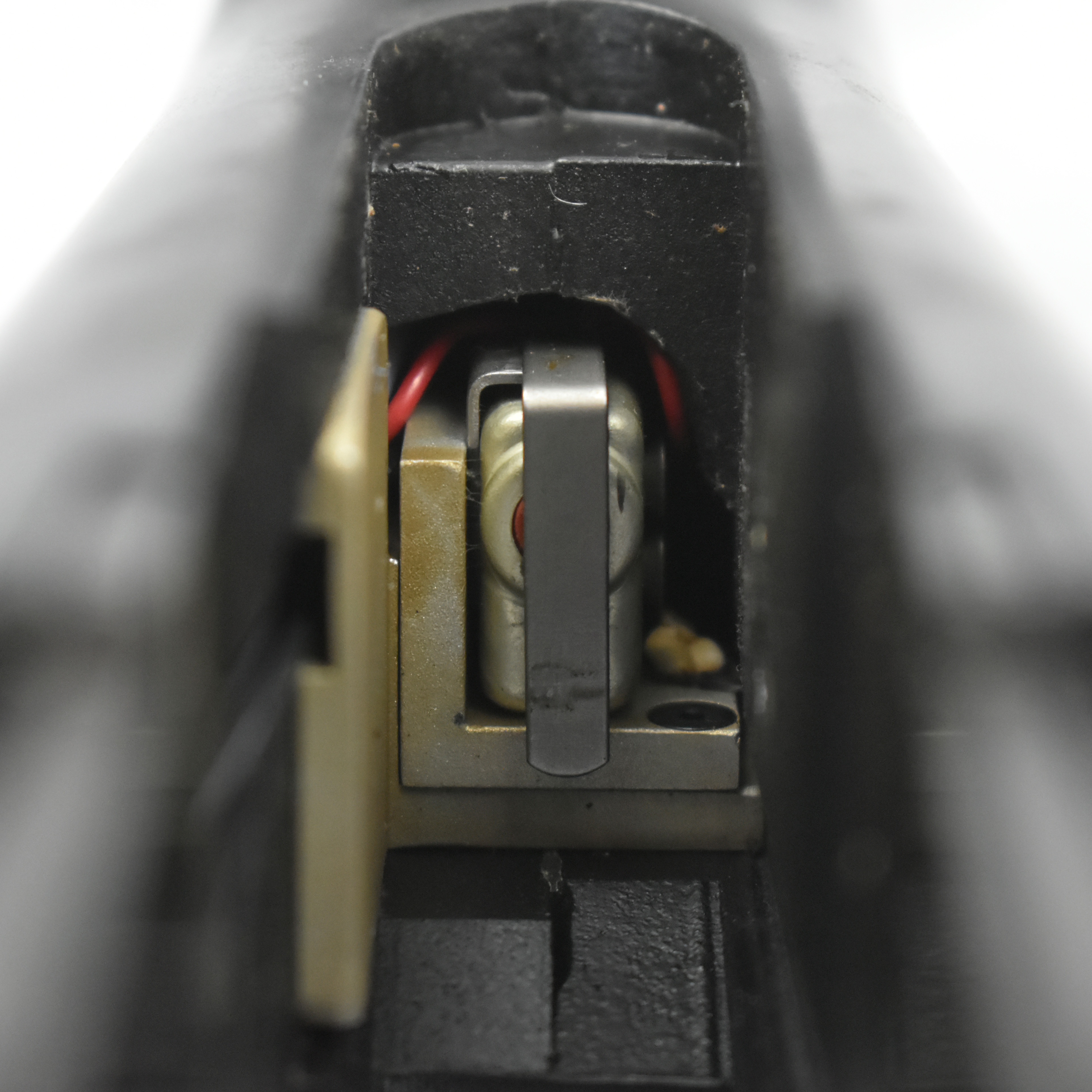
It is activated with slight trigger pressure. On the Model 14A, there is a secondary trigger to the left of the normal trigger which can be used to activate the laser. Shown below is the trigger-switch located in the stock.
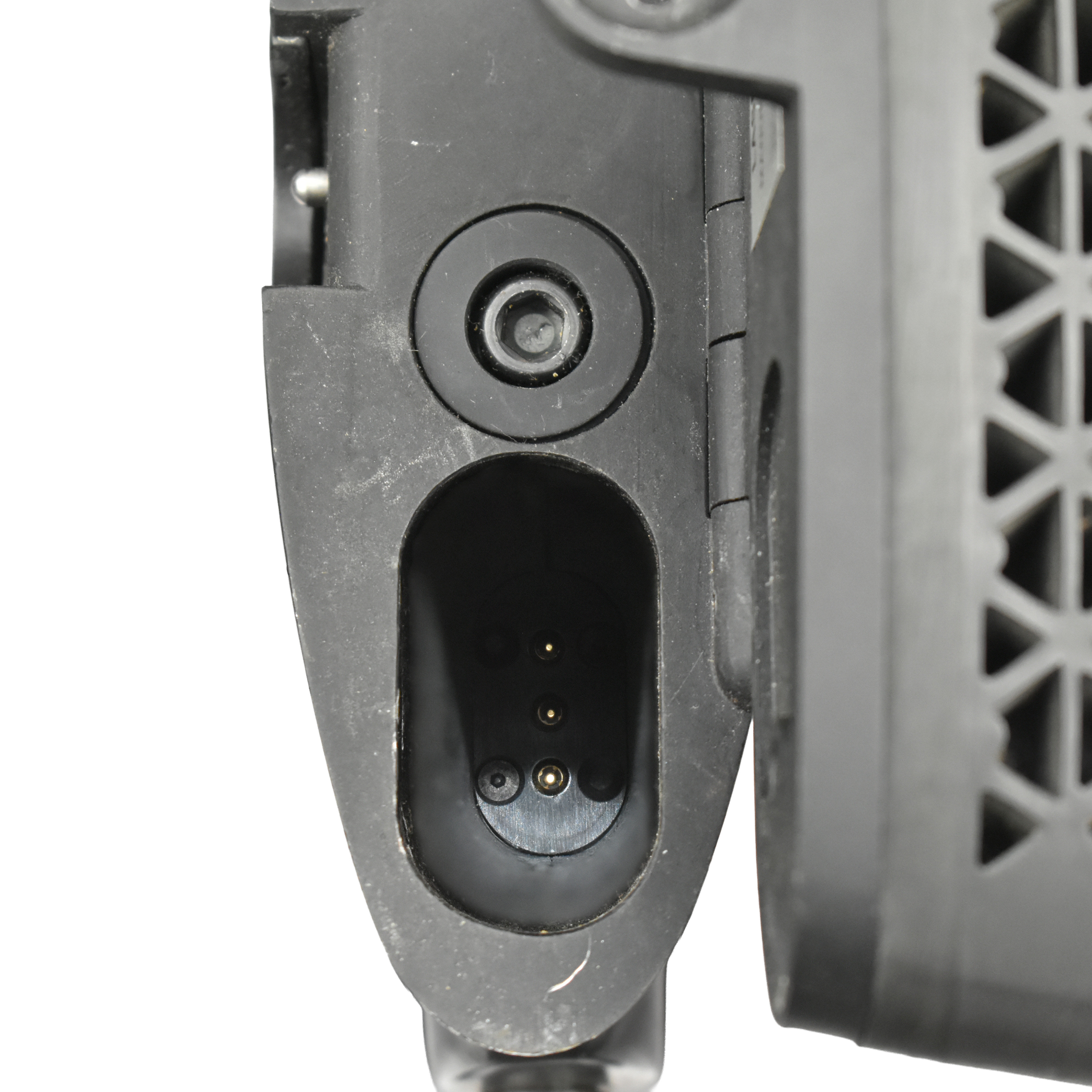
The Model 14 and similar models such as the 7, 16, and 87 all use a helium-neon laser whose function can likely be described here and here, and ran on 14.4v Ni-Cad batteries. They came in both blued-steel and stainless-steel. The batteries provided 40-60 minutes of operation. Batteries are stored in the polymer stock which is capped with a hinged Pachmayr pad.

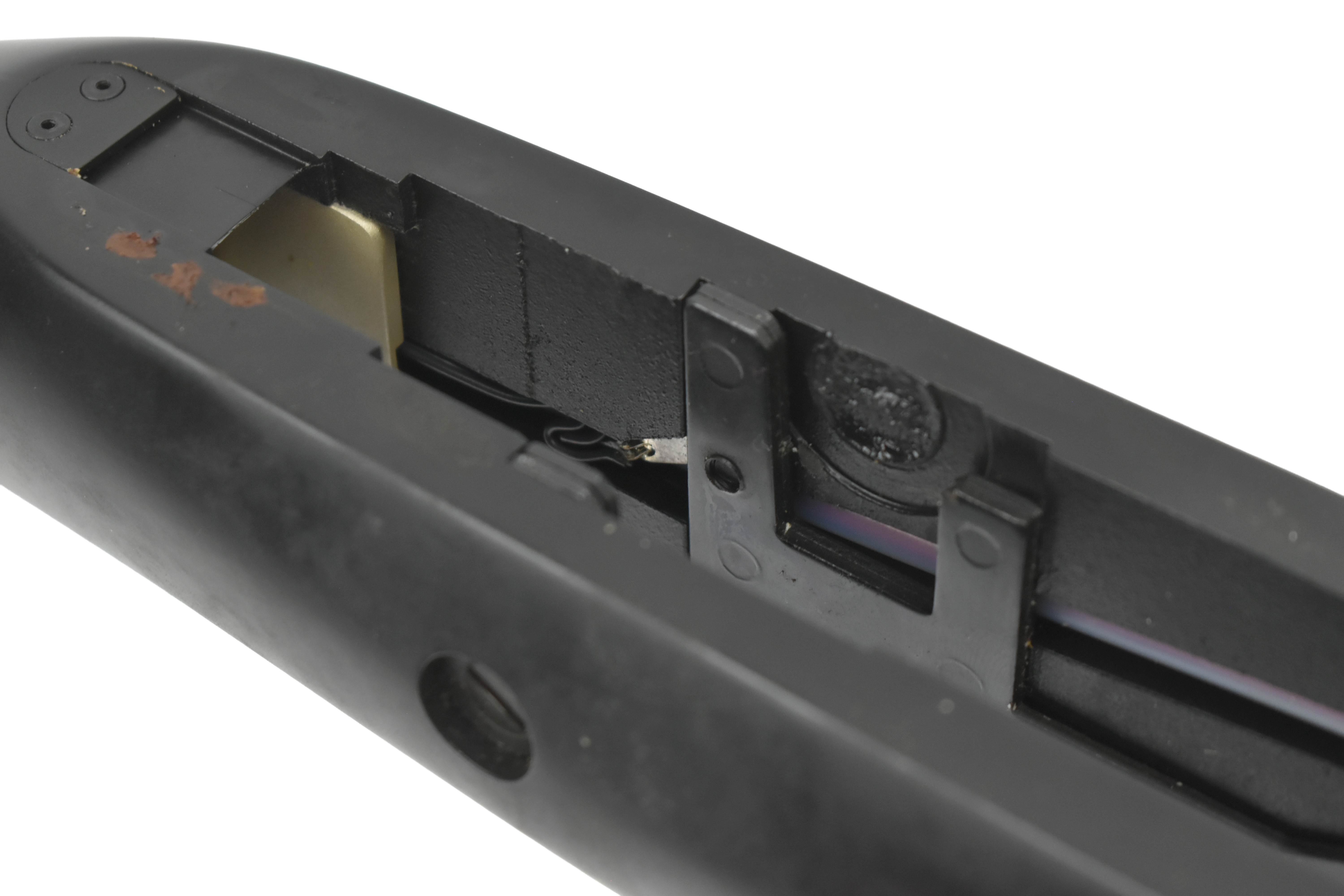
The laser is connected to the batteries and trigger-switch through a wired channel cut in the stock. Translucent tubing guides the wires and protects against grime.
The laser connects via plug. The wire must be guided into corresponding hole of the stock when assembling.

While I would love to test the laser, it is unlikely any functional examples exist today. My sample came with the batteries already taken apart due to heavy corrosion, and the battery housing has been heavily damaged.

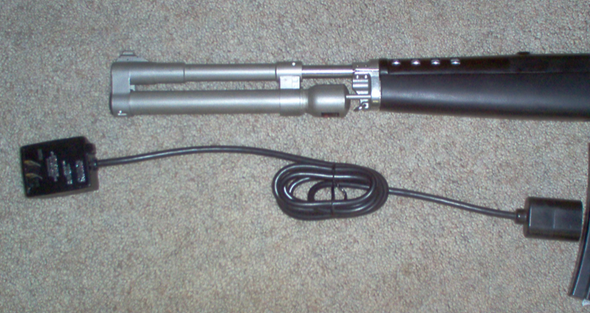
The recharging system was sold separately, and evidently came in more than one flavor depending on Model 14 vs 14A (that, or the battery flavor was common enough that a market solution was available). The SC-870D charger shown above charged batteries in 4 hours.
The other version is shown below.
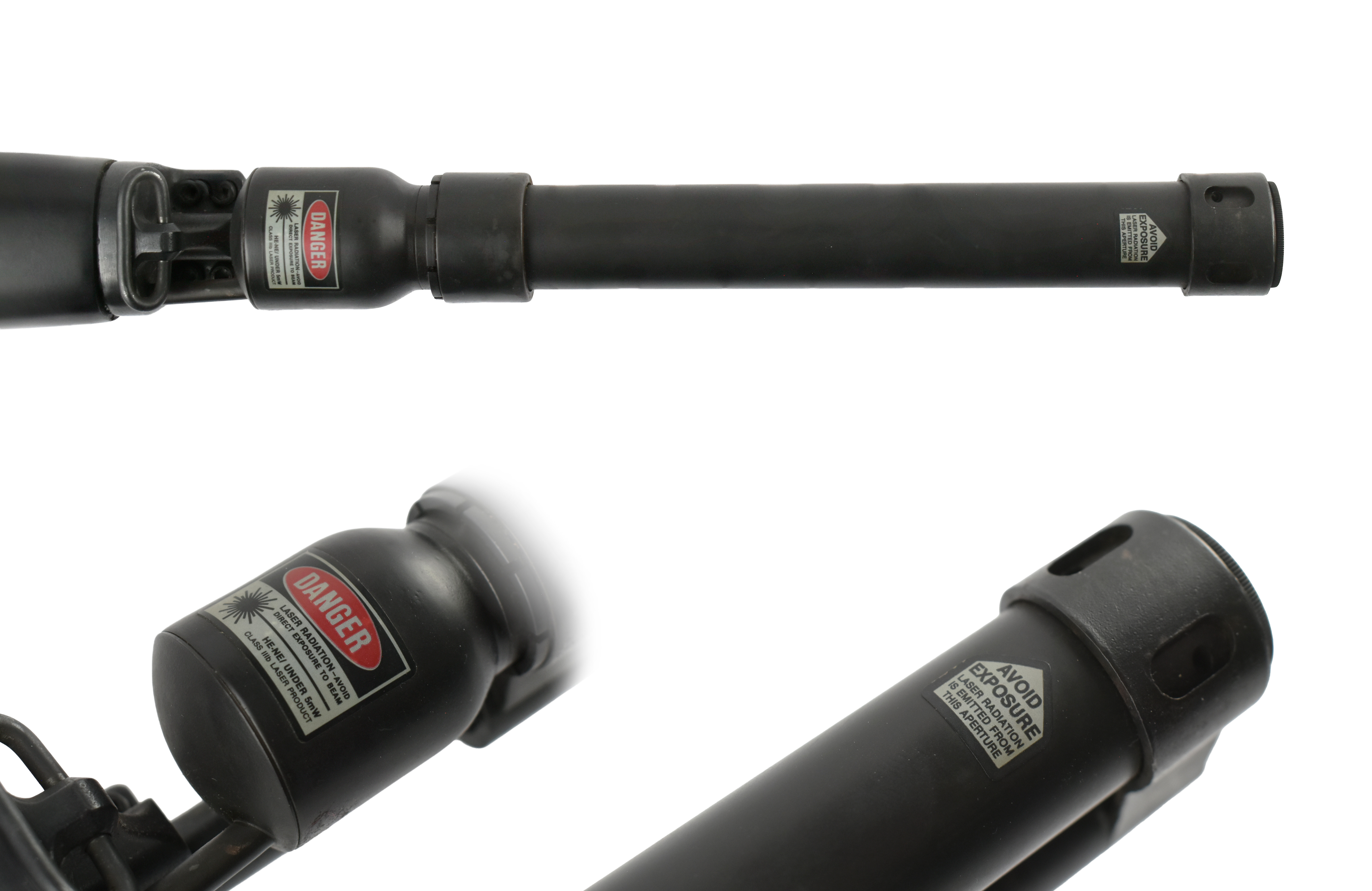
The 633nm dot itself is nominally ~3 MOA by some accounts, and 10 by others. Again this may be due to the 14 vs 14A. The laser dot is advertised to be visible at 1000 yards under “certain conditions” (highly dubious claim) and the beam power was “Greater than 1 milliwatt”.
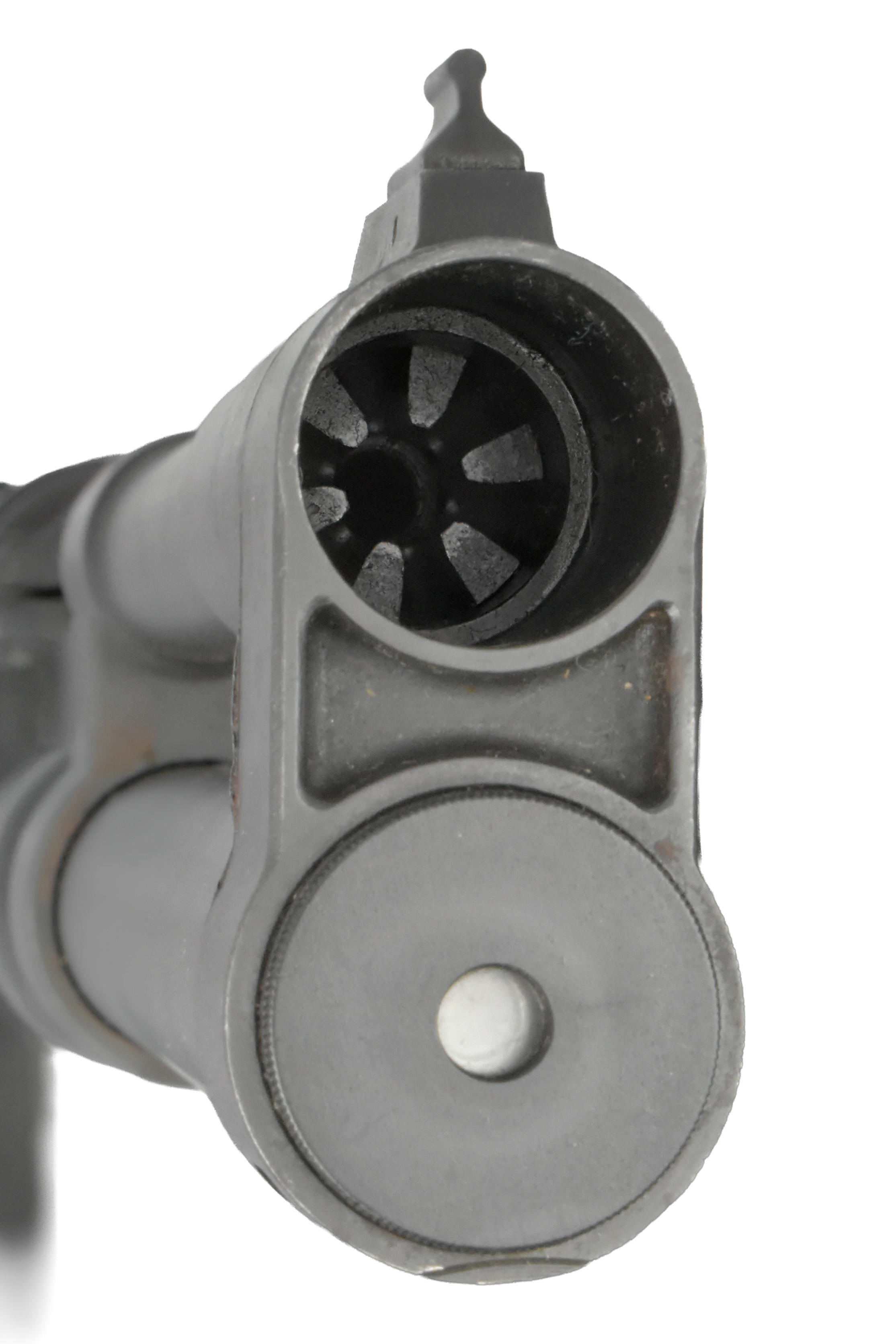
The muzzle sports some bent sheet fingers, which are either for assembly, or to act as a flash-hider to protect the laser from damage. The lasers front-most cap is plastic.
There may be more information on this device in a 1984/85 issue of ‘Assault Rifles’ magazine, but I could not acquire it at the time of writing.
Media-wise, the device appears in Beverly Hills Cop II.
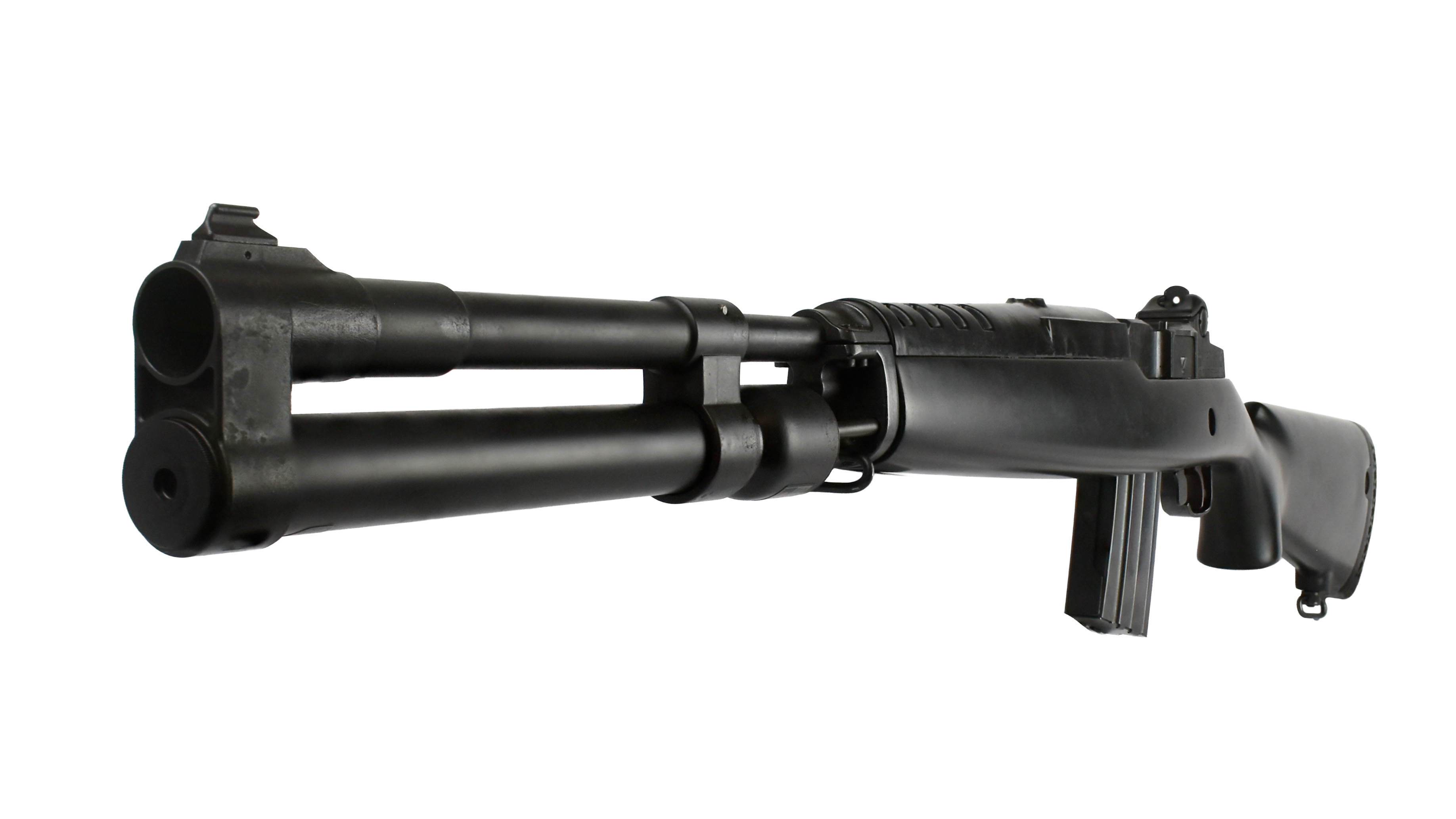
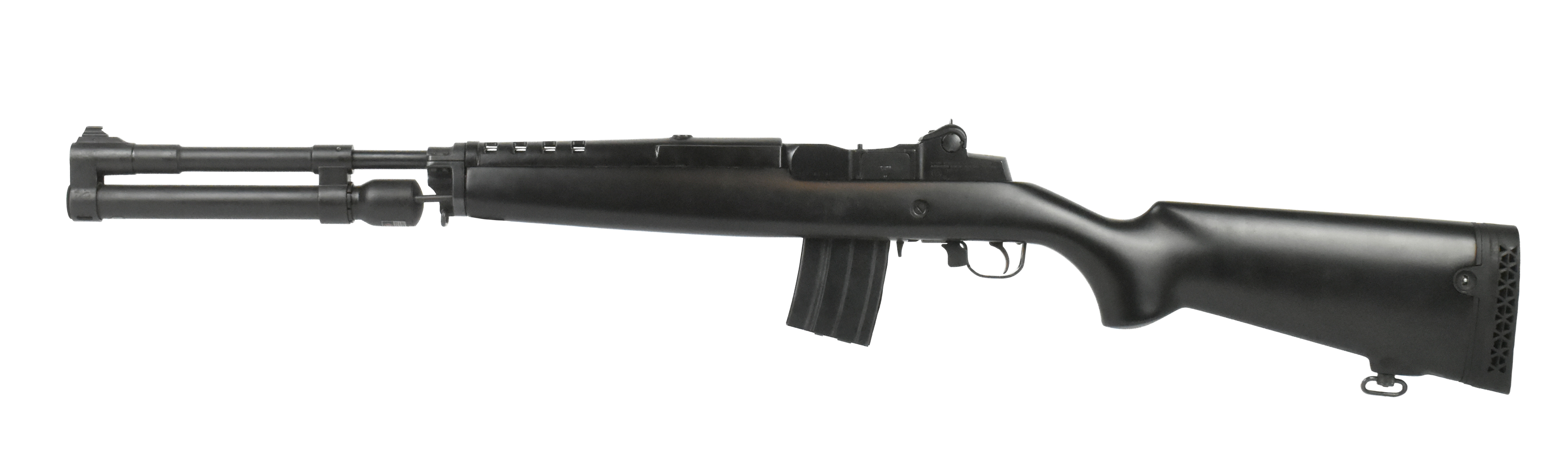
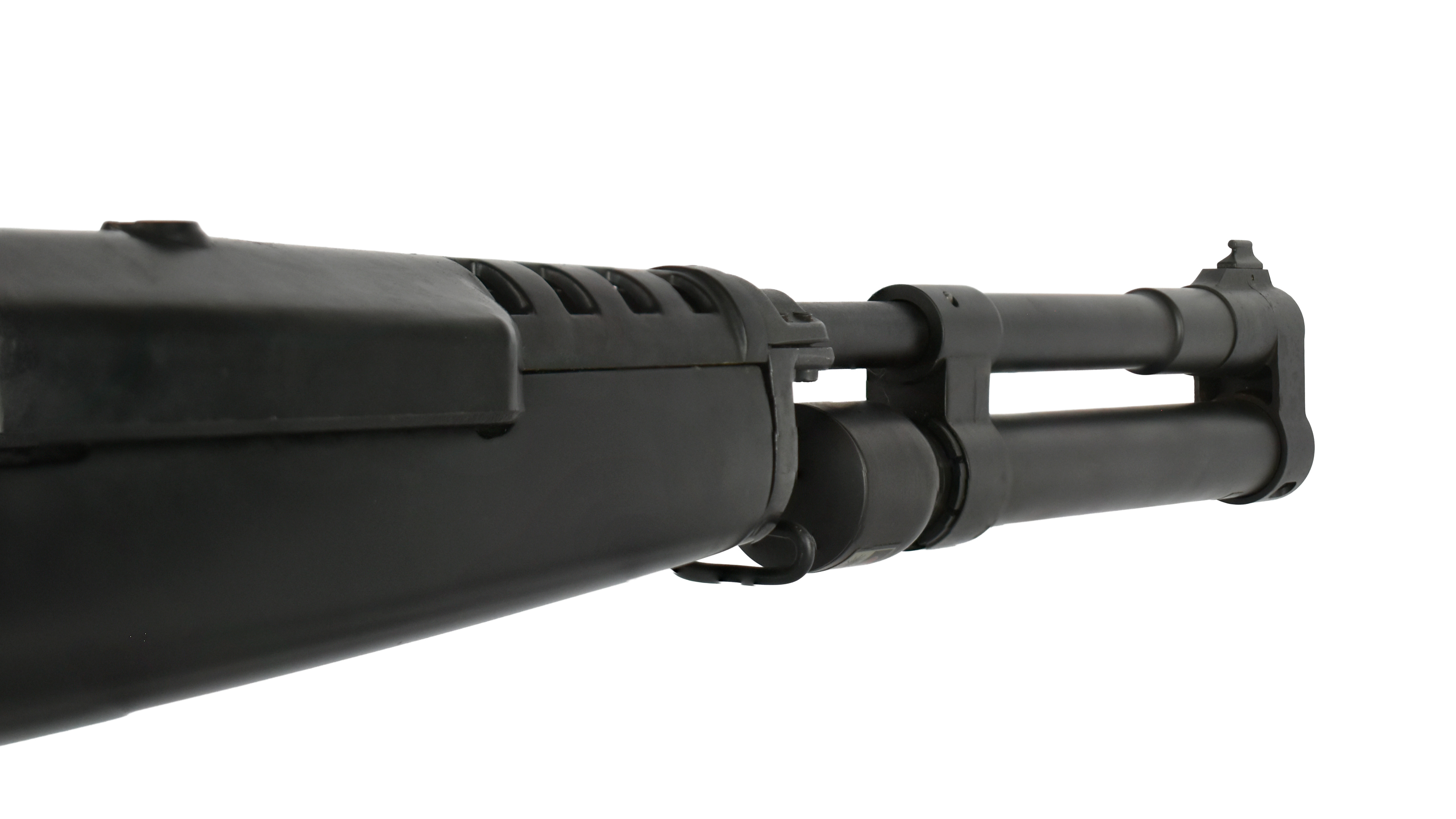
These were made up until at least October of 1984, and there is one reference of a DEA conversion being made in 1986. Laser Products Corp began making ‘SureFire’ branded lights in 1985, and eventually in 2000 the product line became so successful that they rebranded the business entirely to match.
The HeNe lasers themselves were not a great financial success likely due to the cost associated with their production, but the quality of the products gave them the momentum needed to continue developing aiming systems. Another reason they may have divested from the product family so quickly is rapid-onset competition. Not to say there was much competition, and not to say that the competition was immediately concerning, but to remain stagnant would mean quickly being surpassed.
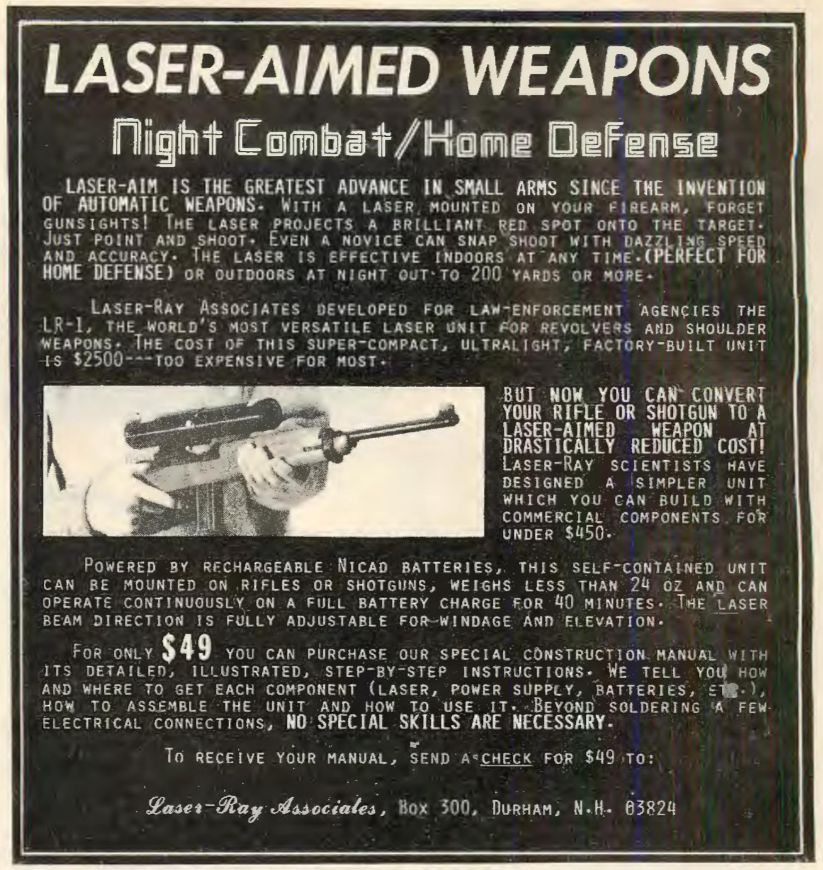
1983 Soldier of Fortune Advertisement for… what is probably a scam.
Lasers aimers as a whole had been popularized by LPC’s breakthrough and spoken of highly in many writings. So it was time for them to continue innovating. Their next developments will be discussed in a later article.
For those wishing to modify an existing Mini-14 to match with a fabricated replica, you might want to check out Paladin Press’s dimensioned drawings of the base rifle for assistance. Additionally you can look at others who have made clones of the Model 7 laser, which is the same laser unit.
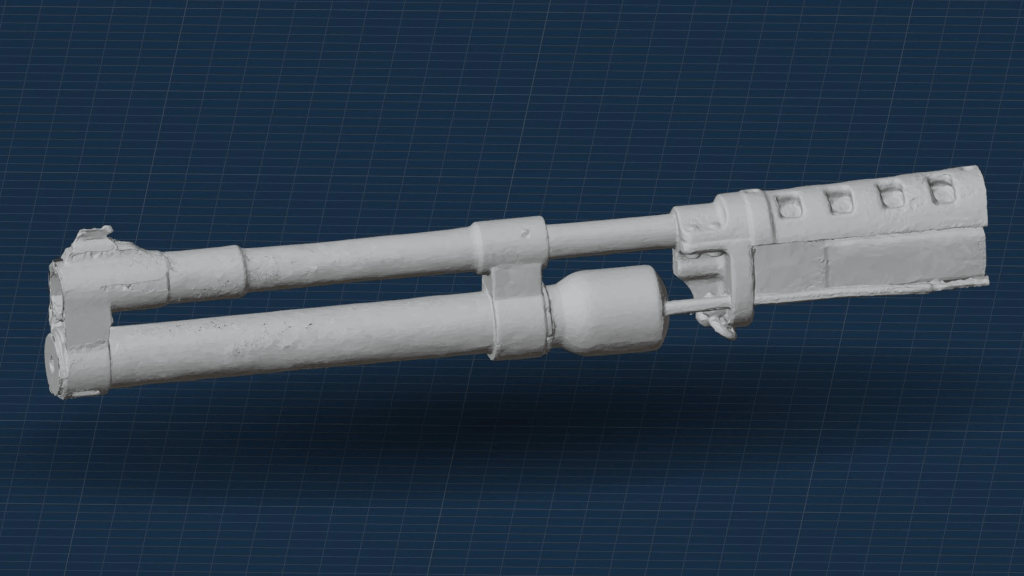
I have also done a 3d scan of the device, which can be downloaded here
It is an .obj, and I decimated the mesh to reduce file size, but just contact me if you need a higher-res version. There are scan artifacts!
Leave a Reply