




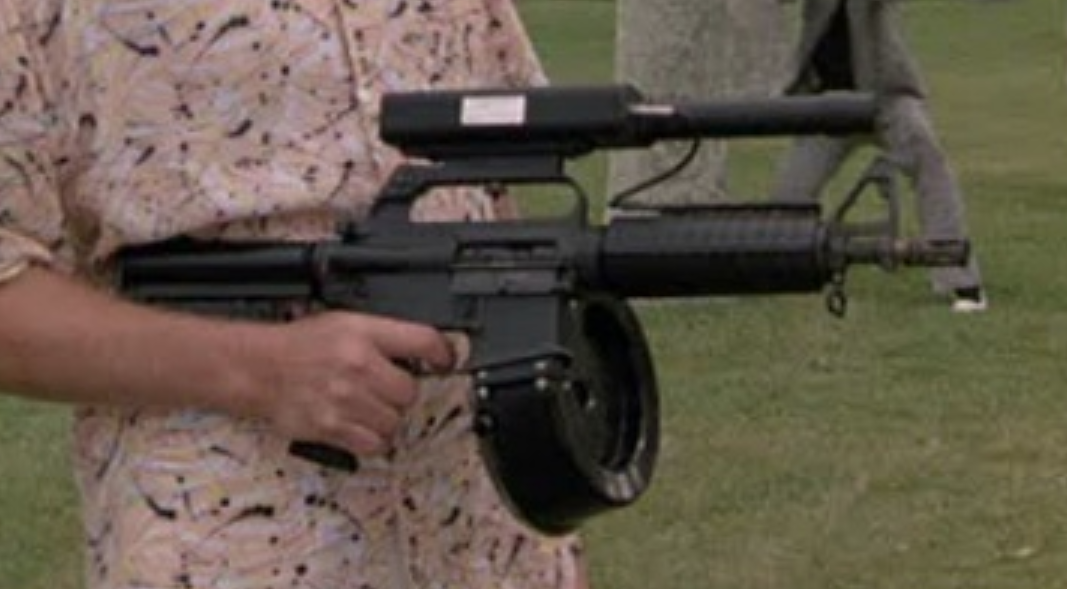
The Laser Arms Corp R-100 has long been a source of mystery for the retro accessory enthusiast community.
Believed to have been most prominently seen in Miami Vice Season 2, Episode 8, “Bushido” (November 22, 1985) the laser aiming device turns out to have a fantastically storied history.
This will be a long and complicated story to tell.
TL;DR? The laser never really existed, and was one of many scams peddled by notorious fraudster Marshall A. Zolp. An alcoholic, Vietnam helicopter pilot (deserter), prolific con-man, and decades-long tax evader (based??).
The device in the show itself isn’t even an R-100!
Ok, what’s the laser in the show then?
The device shown in the show is actually a Laser Products Corp (old Surefire) Model 32, which is the earlier version of the more common Model 36. First, let’s take a look at the R-100 versus the Model 36.
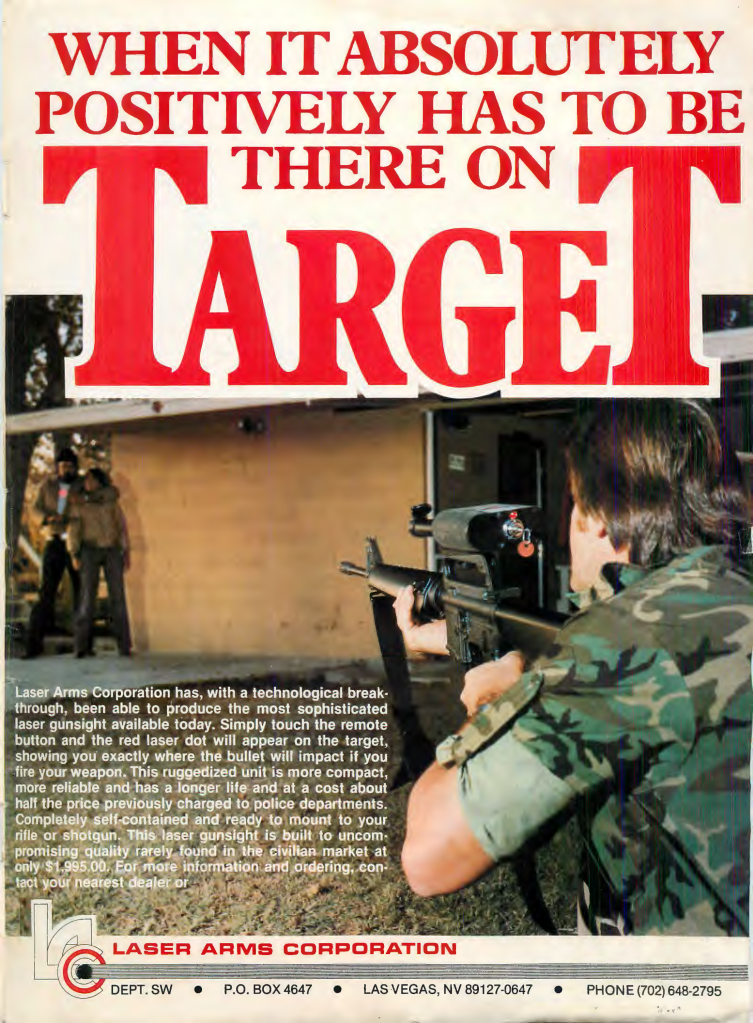
R-100 Advertising from 1983
Above, the R-100 features a large rear body and an extended tube, yes. It is also conveniently photographed to show very little of the laser itself. It does however depict a turn-key ‘on’ switch. Now, the LPC Model 36 against the device shown in the Miami Vice episode.
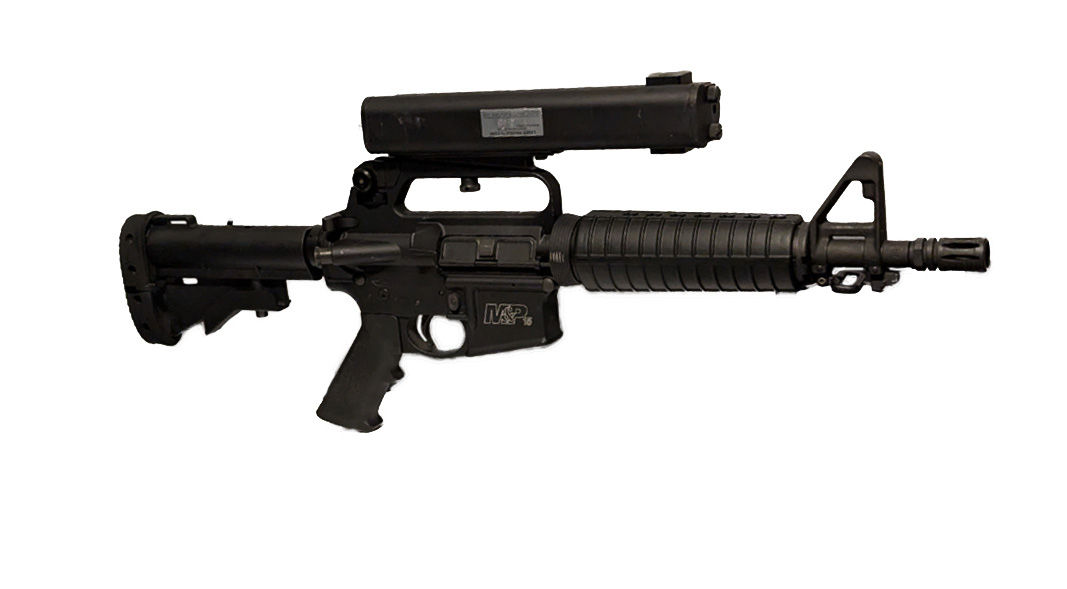

Notice the following:
– The right half of the body is squared
– The side features a large plaque with model information
The Model 32 is only seen in one other piece of media.
“Advanced Weapons Training” by Mark V. Lonsdale (page 95).

The Model 32 has the same main housing shape (but not overall length) as the Model 36. It would make sense as an early version of the Model 36, as LPC would have been wise to “combine” the housing and the extended tube, elongating the overall body but removing the relatively weak extended tube.
The outcome of this, likely being the Model 36. (simply engineering conjecture with no source)
This image is simply referred to as “Laser Mounted MP5”. And the book being as well sourced as it is, only cites three “Lights and Lasers” providers at the end of the book
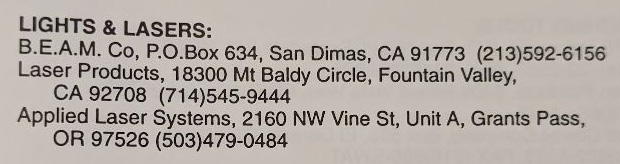
The others being B.E.A.M. and Laser Devices Inc. Neither of those companies made anything similar-looking to what was seen in the Miami Vice episode (which is a perfect match for the laser seen in this book) and again, the main housing is distinctively “LPC”.
The model 32 can be seen here, and is a perfect match.

But what about the actual R-100?
The “Real” R-100 as seen in their advertising materials (nothing more than a hacked-together marketing prop) is likely a re-skinned LPC Model 36 with a fake housing. The overall size does mean they could have easily attached a larger outer housing to the LPC device. The front half strongly resembles a Laser Devices Inc FA-9 (or FA-9P). However it could just as easily be the front end from an AMT-LS1 or even an SC/PQV-100 (both circa 1986), or really any other mystery-meat laser made at the time, as it does appear to just be a tube that they built a housing around.
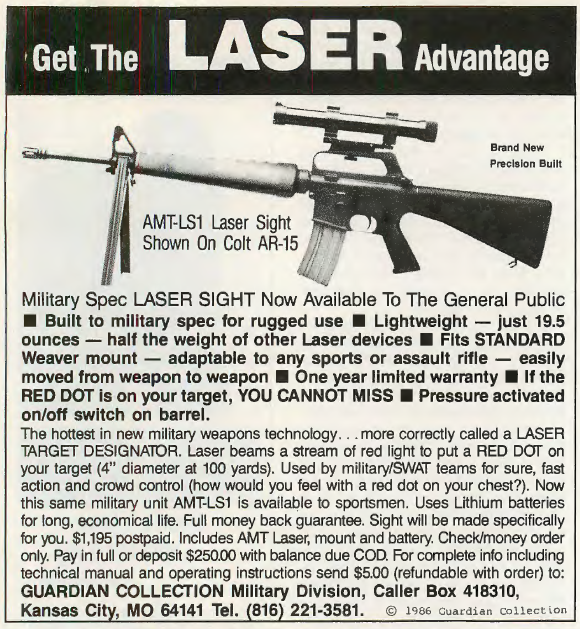
The R-100 was advertised in various magazines in 1993, and the most descriptive example is from “Survival Guide” magazine, July edition.

And how do we know it’s called the R-100 at all, given the vague marketing? Well, aside from the external media references, there was a filing for FDA approval for the R-100 laser made by Laser Arms Corp, and it is the only one of it’s kind ever found.
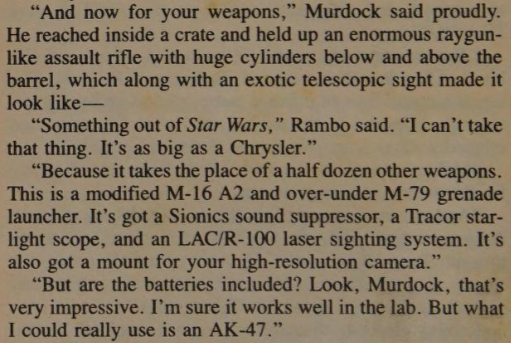
Now while I can’t tell you what it really is with certainty, I can tell you why the R-100 never truly existed in the first place outside of some examples made for marketing and misleading. Despite this, the laser is referenced in media at the time, for example in the “Rambo: First Blood Part II” novel.
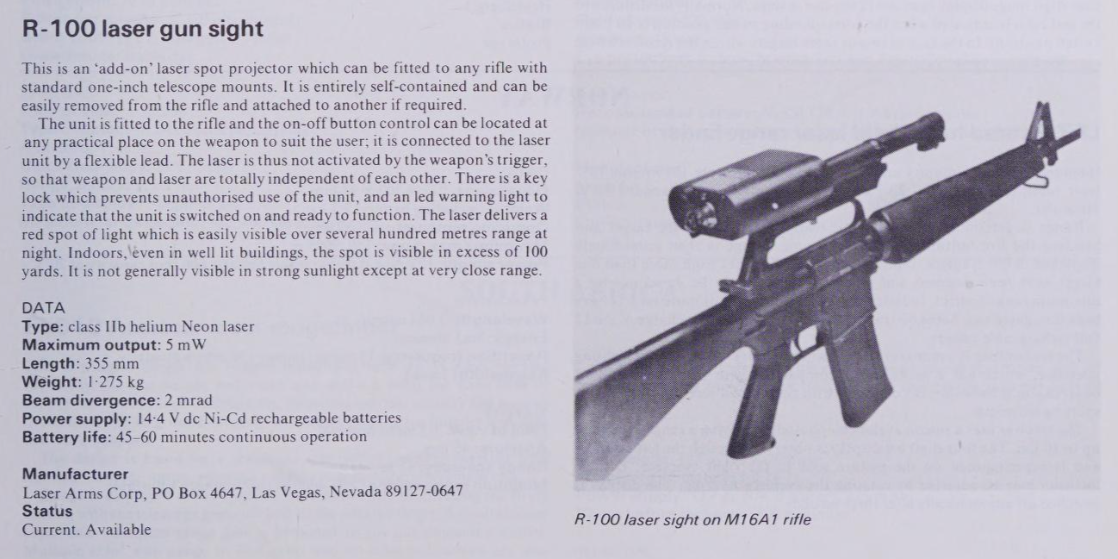
In addition, even more “legitimate” institutions fell for the hype. Jane’s Infantry Weapons 1983 edition refers to it positively, unaware of the true situation. For those who don’t know, Janes has been a mainstay of documenting the “what’s what” of military hardware at any given time and is a commonly used resource for military planners and those who need to know such things.
The story of the item is really the story of our antagonist, Marshall A. Zolp.
Zolp was barred by the Securities and Exchange Commission from working in the securities business after being implicated in at least seven major swindles during the 1980s, but he skirted the ban in his latest schemes by adopting the alias “Alex Seagrove”.
Zolp had been named by the State of California in a 1977 cease and desist order for the sale of unregistered securities; and Zolp had been indicted in Las Veqas, Nevada for obtaining money under false pretenses.
Laser Arms was incorporated in 1986. This indicates that the business was essentially running without any real form for around three years. In the 1987 court case, the judge stated that Laser Arms Corporation had “no legitimate assets”. The SEC went on to say that LAC was “a phony company with no business activity, fictitious financial statements and a nonexistent product line.” In later years, he was described as “a vehicle for various organized crime figures”.
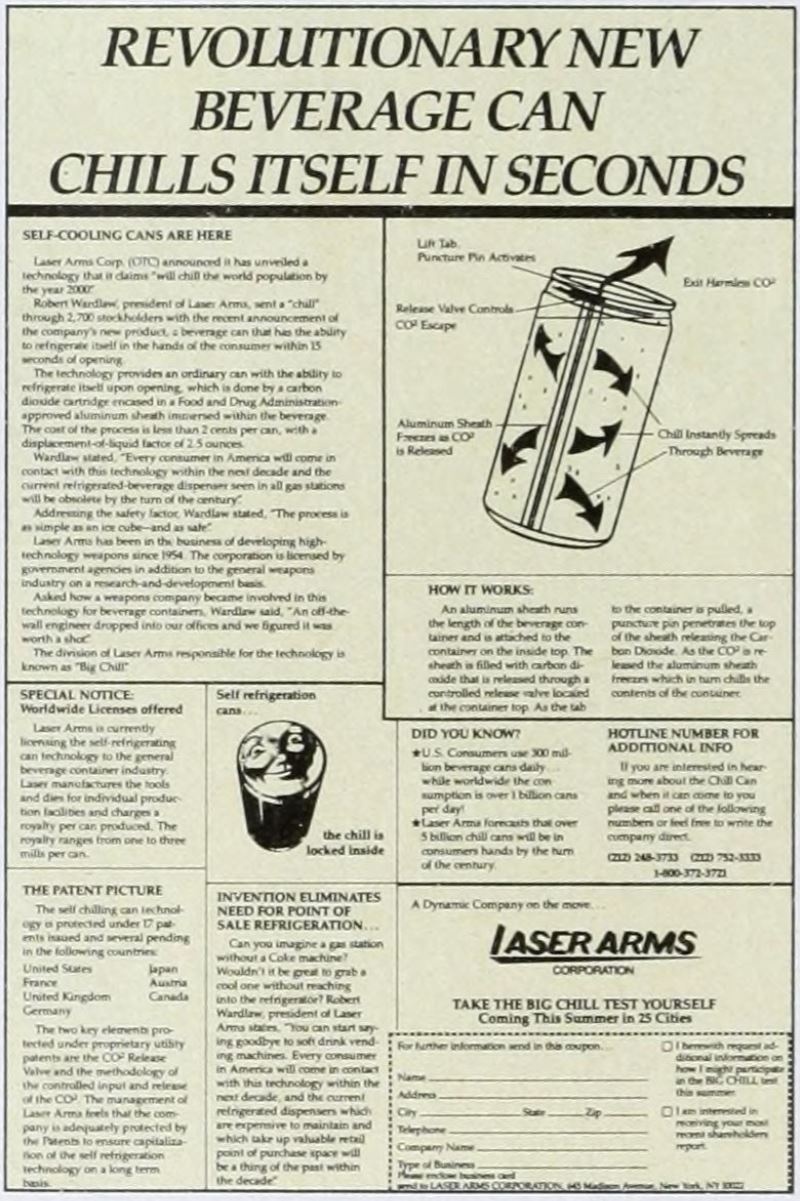
He was indicted for defrauding investors for his Self Chilling Beer Can business in 1987. This invention was also fraudulently sold under the Laser Arms brand name. It seems that if anything, Laser Arms Corp was far more known for the Beer Can than the aiming laser.
Maybe that’s because they were asking for around $5,000 in today’s dollars for a simple visible laser, which led to few “sales”.
In his second to last known case he attempted to get the California Public Employee Retirement System (CalPERS) to invest in “an entirely new financial instrument he called the “Gross Revenue Investment Dividend,” or GRID.

To market the GRIDs to the public, Zolp created a prospectus for a company called Kovac Securities Inc. that neither disclosed his participation nor his past troubles with the law.
Zolp also orchestrated a scheme to manipulate the shares of California Cola Distributing Co. to help finance the GRID scheme. He was released on parole in 1990, and he plead guilty to the GRID fiasco in 1991.
All schemes involved fake press releases, publicity meetings, and media events. Forged signatures, fabricated executives, mail fraud, and simple stock manipulation were also elements at play. He was wiretapped, however… “because many of the suspects were aware of the pending SEC investigation into Laser Arms, they were particularly cautious about infiltration and “normal” governmental surveillance”.
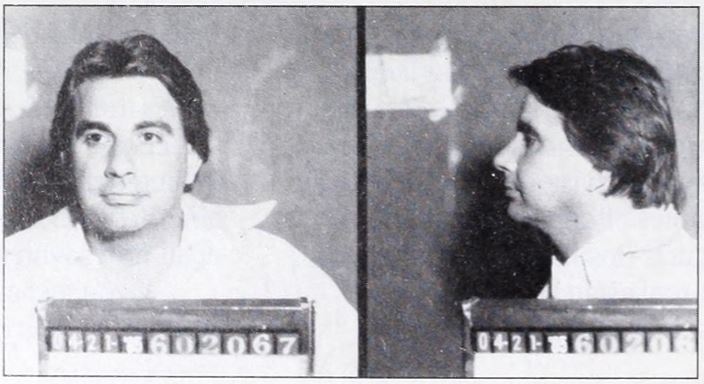
Miami Vice and its producers are seemingly not mentioned anywhere in any court documentation or public reporting in connection to the case, so either they received a genuine unit (non functioning marketing item?) or declined to get involved to save face.
While in prison, Zolp tutored Stephen Cohen in the art of crime and fraud. If the name is not familiar, he agreed to pay $1.8 billion in fines ($900 million in forfeiture and $900 million in fines) in one of the biggest criminal cases against a hedge fund.
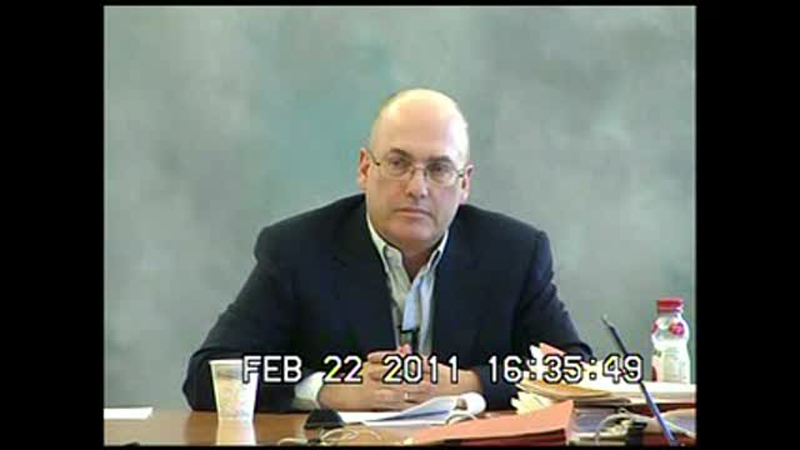
In total, Zolp (almost) ran away with $300,000 with Laser Arms Corp.
In his final case, he was investigated in 2000/2002, and then charged with a pump and dump scheme in California in 2005.
This dealt with the energy industry.
The whole situation, frankly, is out of my wheelhouse.

At the time of writing, he is 77 years old, if he lives at all.
Other than a non-functioning phone number and the obituary of his father, not much is known.
It is possible he is still in prison for the crimes he was sentenced for in 2005, but then again, Zolp is a Panamanian who purportedly owns Geneva Financial Ltd., a bank in the Caribbean tax and secrecy haven of Nevis. A man with secret wives, stolen cars, and a suave attitude, who knows where he is now.
Despite being charged five times total, he may have six lives (and more aliases to spare).
Leave a Reply