




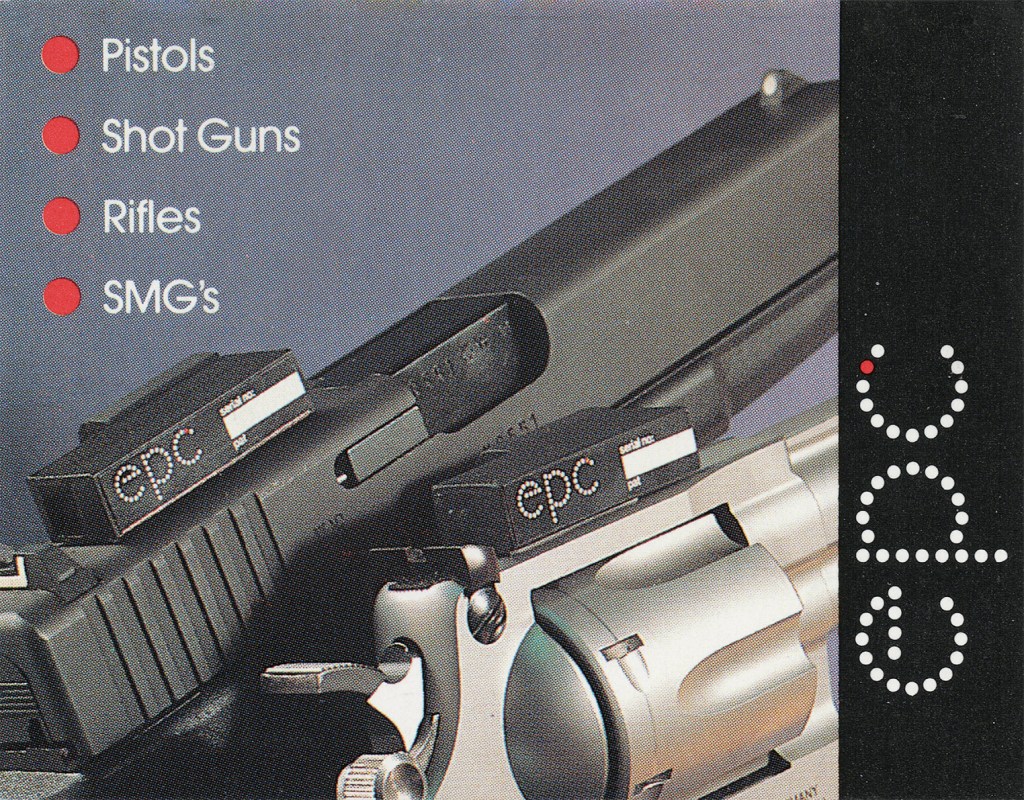
The innovative ‘Subminiature Electronic Dot Sight’ sight, released in 1991 by Electro Prismatic Collimators Inc, was truly impressive for it’s small size and adaptability to various firearm types. Weighing about a half-ouce, and fog proof, it functioned essentially through a solid brick of glass along the length. While it was very low-profile and featured automatic brightness adjustment, the battery life of 18 hours and clunky mounting system limited it’s appeal in many circles.

Advert from ‘American Handgunner‘, July 1991
Identical ads appeared in ‘Front Sight’, a publication for IPSC and USPSA competition shooting.
What clunky mounting system, you ask? Well it’s more of like a glue because it’s…. glue. You just glue the sight to your gun. That’s it.
Now granted they had adapter plates for a spread of handgun slide shapes, but all retention is provided by a two part epoxy.
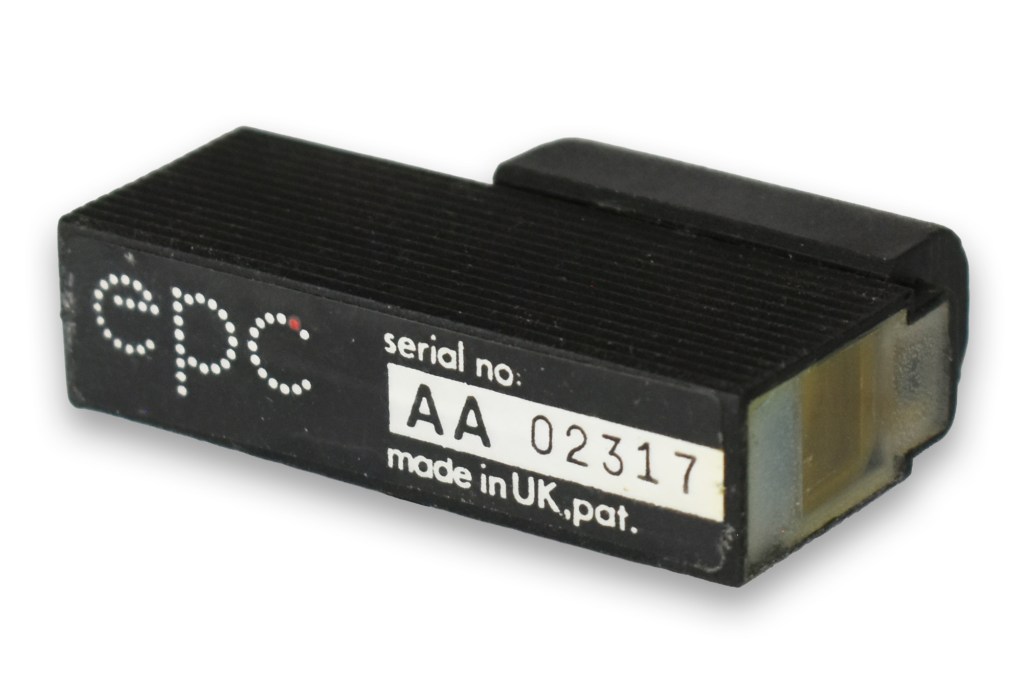
While I was unable to identify the specific patent for the device, it should be known that this was almost certainly an invention of ‘Ring Sights Ltd’, who you may know for the LC-7-40-M16 and the HC-18-80, for the P90. They had been patenting similar devices a decade prior, and advertise creation of the device on their website. Ring Sights is a UK based company in general. Them, and their other products will be discussed in detail in a later article. The EPC itself might have been the product of a few employees from Ring Sights splitting off, it’s hard to verify this.
The 1.4V hearing-aid batteries are held in a detachable housing that also functions as the switch. The cap/plug count be installed backwards on purpose to provide ‘Always-On’ functionality.
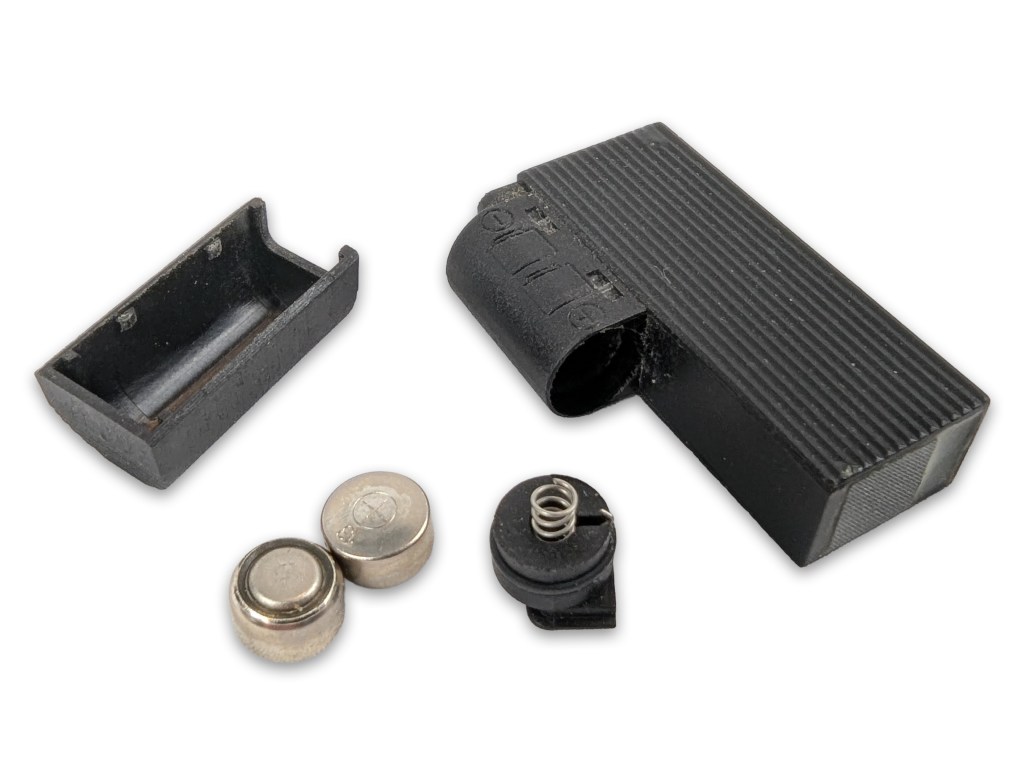
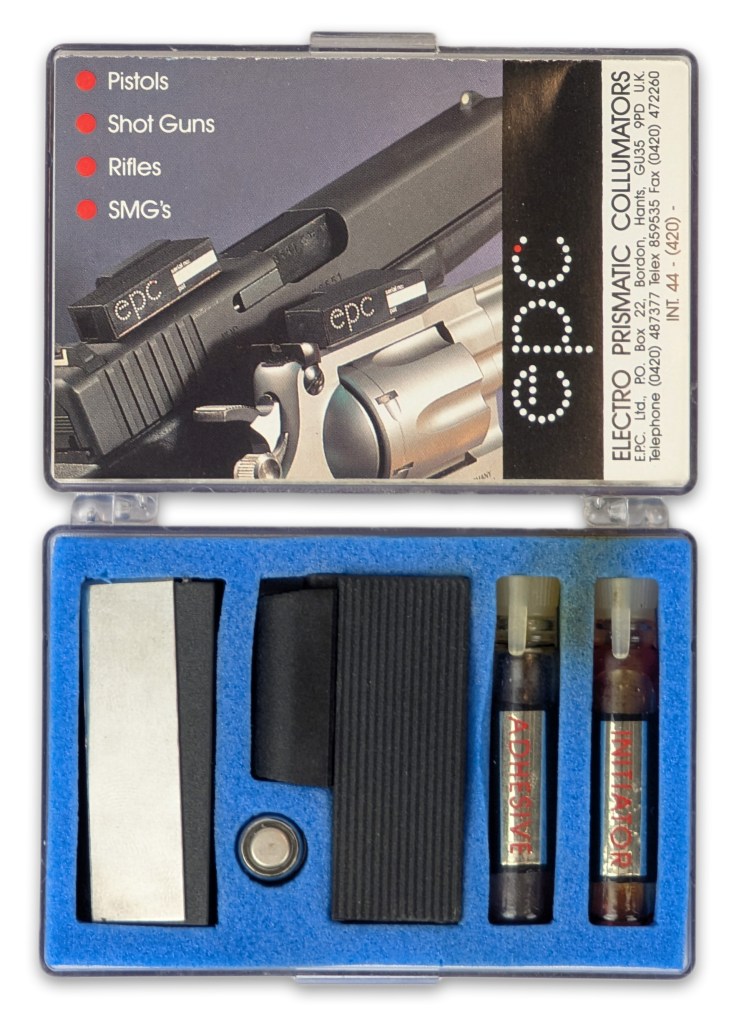
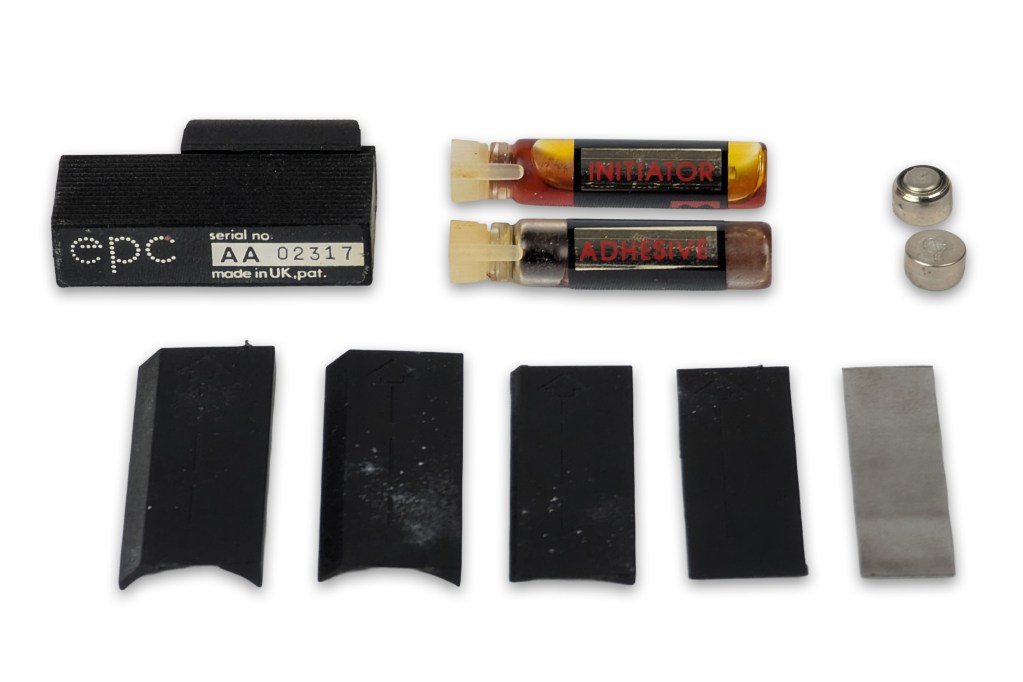
The optic sold for $136 ($311 in 2025 dollars) and included several mounting plates for different curvatures of slide surfaces, as well as the necessary epoxy, and batteries.
EPC (the business) ran U.S. offices out of Lancaster PA, Philadelphia PA and Lincoln NE. The president over US operations was Ian R. Flack, who may be the same Mr. Flack previously appointed to chairman and CEO of the Aerospace division of Alex-Ander Howden.
While I am unable to cite almost any examples, even in text, the EPC later evolved into the ‘Mach 1’ and ‘Winter’ sights of similar type and presumably similar size.

Back to the sight in question. Below is the typical packaging, although one other version has been seen.


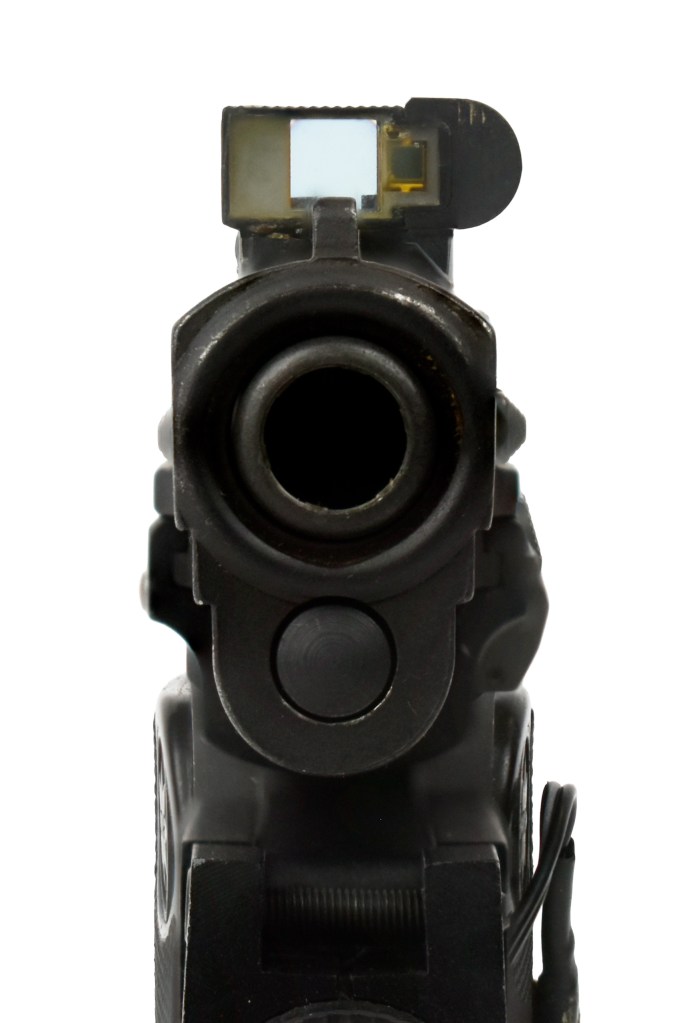
The optic sat low, often co-witnessing with sights. It should be noted that the window is simply miniscule and somewhat hard to acquire. The dot itself is 3-5 MOA.
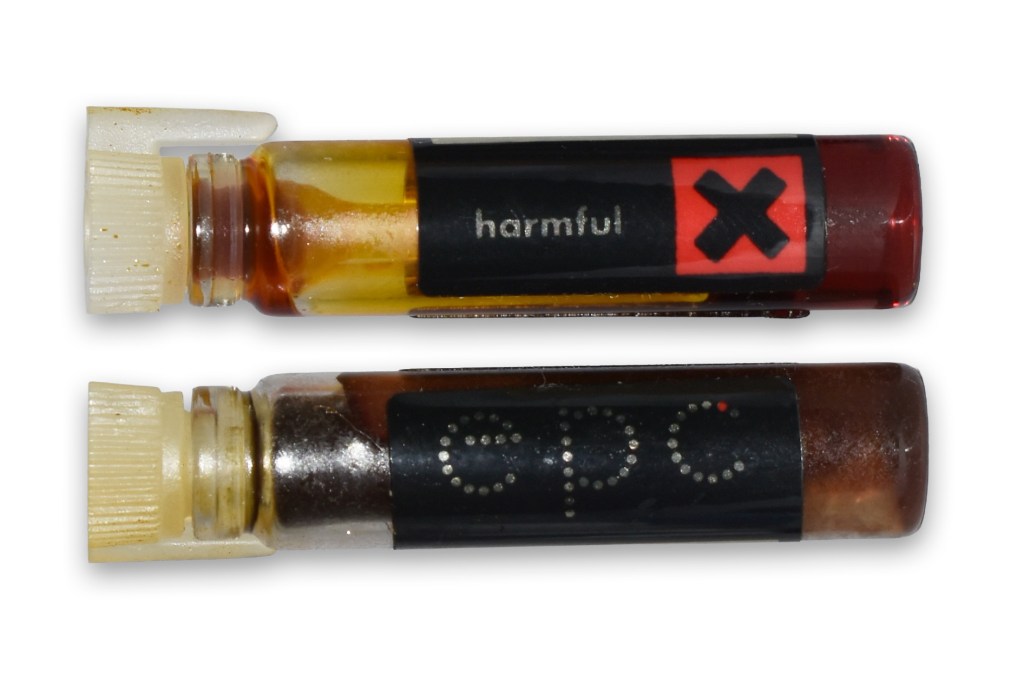
The included epoxy vials were to be mixed together, applied to the interface plate, and then you zeroed the optic as it set (appx. 30 min) and waited until it was cured 48h later before firing.
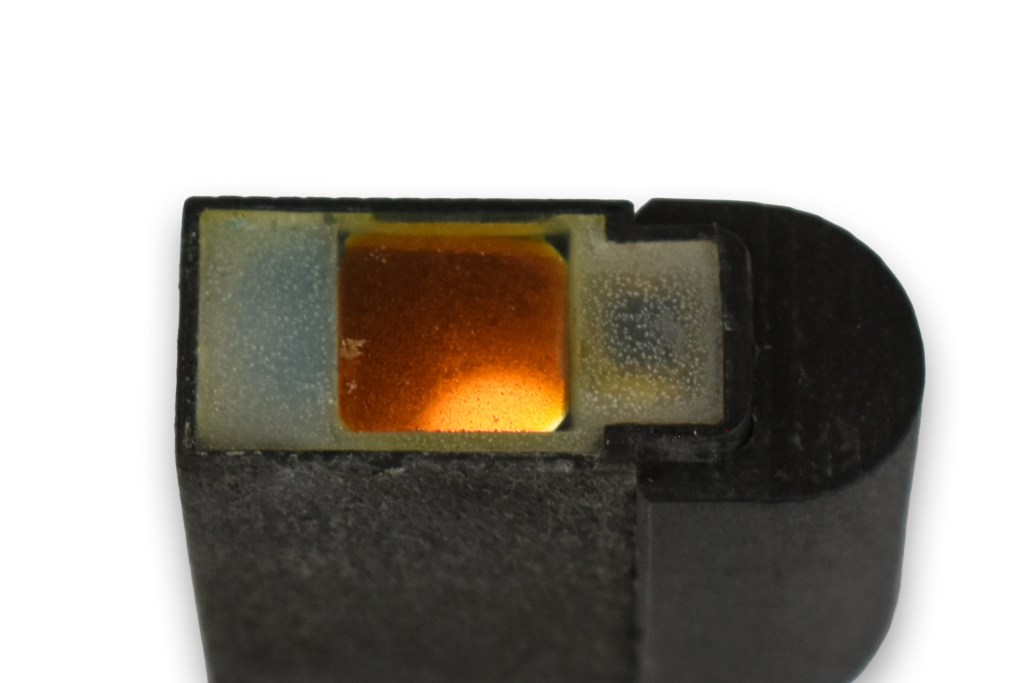
The coating on the front produces an amber reflection at certain angles, and a blue hue through the aiming window. It appears to be pipetted in, given the lack of corner coverage. The aiming window is 8x8mm.

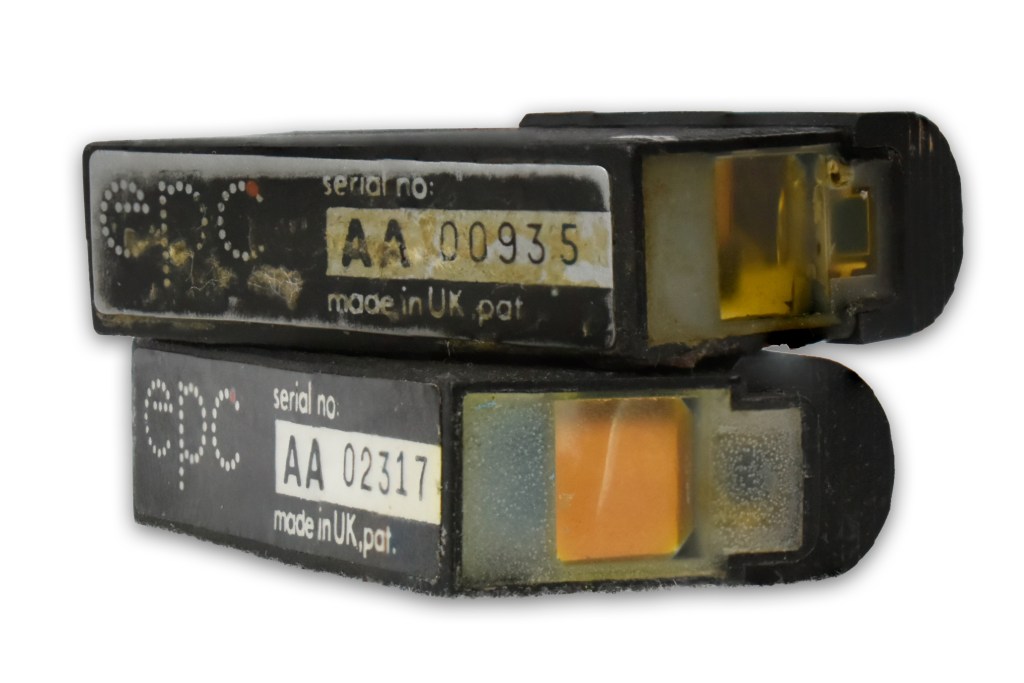
Sales for these breached 100,000 and saw limited use by police, however an ‘End Year’ for production is unknown.
Anecdotally, if you come across a firearm that has one of these installed – take care. I purchased a Star 30M just because it had the sight, and the optic flew off the slide within the first magazine. The epoxy clearly weakens with age!
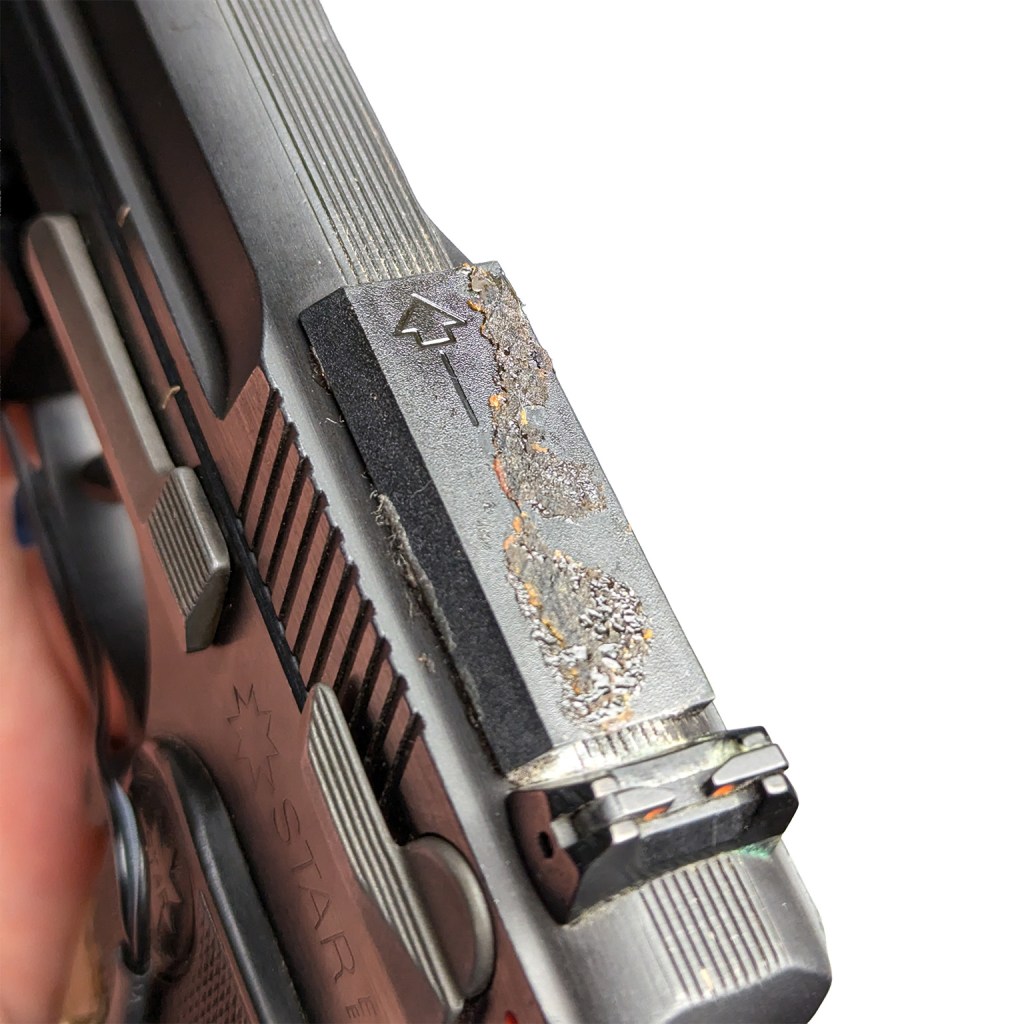
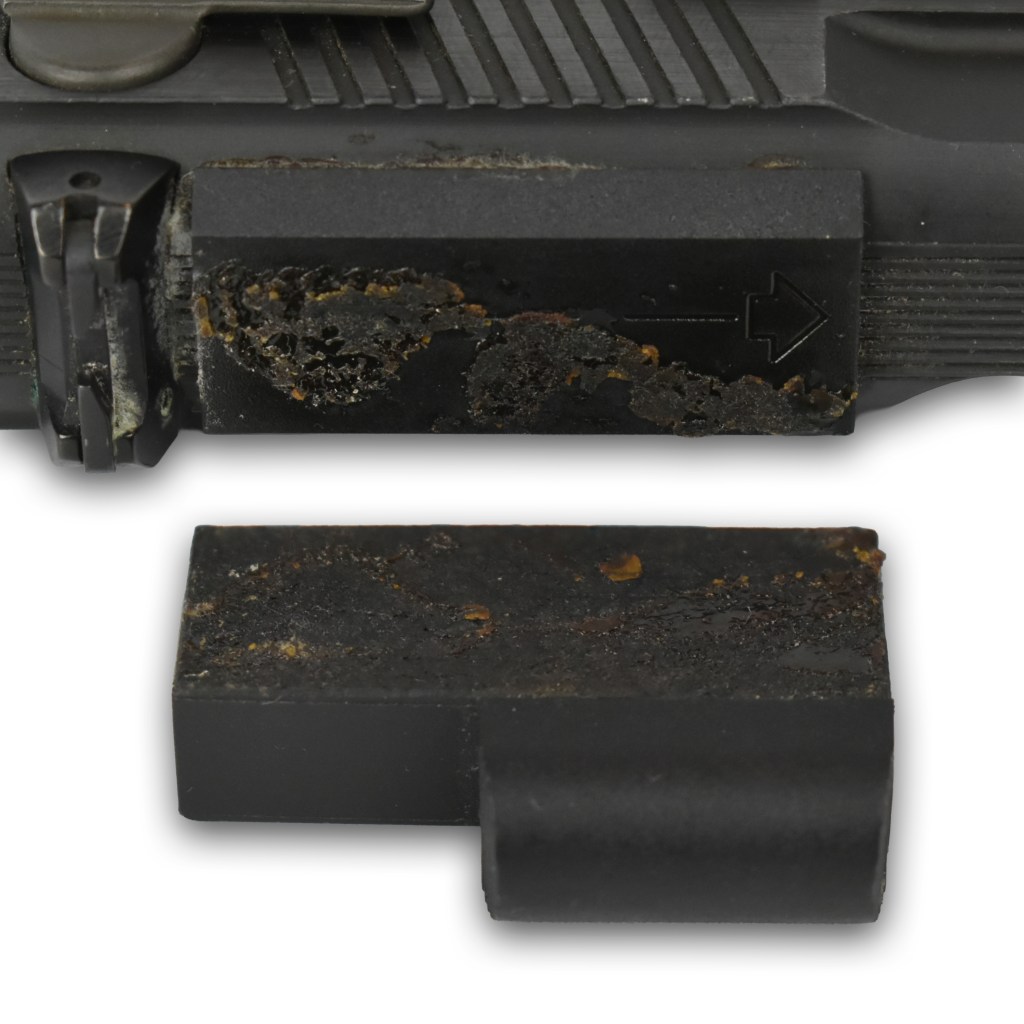
Note to my marine readers – please don’t eat the residue.
While these are certainly neat, I would say most examples today are just unusable. Try to verify if the sealing compound at the front end is bubbling, as this can impact the light collecting chip. In a pinch, you could probably get away with JB-Weld to affix this to your firearm, using a similar zeroing process to the original instructions.
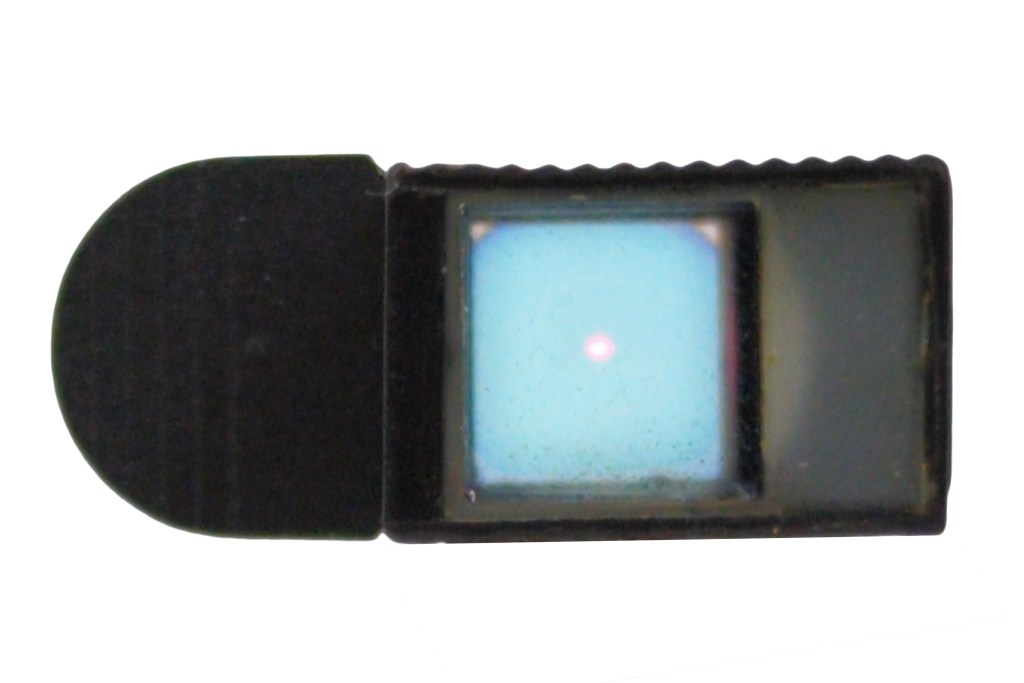
If you want to have the most niche setup at a retro-themed handgun shooting competition, this is the way to go. Tragically these are very very hard to come by, much less in working condition. You can use LR754/393A batteries if the old ones have died.
Resources
Addtl. Sources
- Sapper9 Blog
- Shield Sights Website
- ScatteredShots Blog
- American Rifleman Jan 1992
- American Rifleman Keefe Report, 2015
- Jane’s Infantry Weapons, 1992-93
- Jane’s Infantry Weapons, 2002
- FrontSight USPSA, Sep 91
- FrontSight USPSA, Jan 92
- A very upset customer
Leave a Reply