





First released in 1969, the Singlepoint OEG was a transitional sighting system developed, manufactured, and sold in England by Singlepoint mainly in the 70’s. The sights were imported to the U.S. for civilian sales by Normark, whilst Military and LEO sales were handled by Armalite.
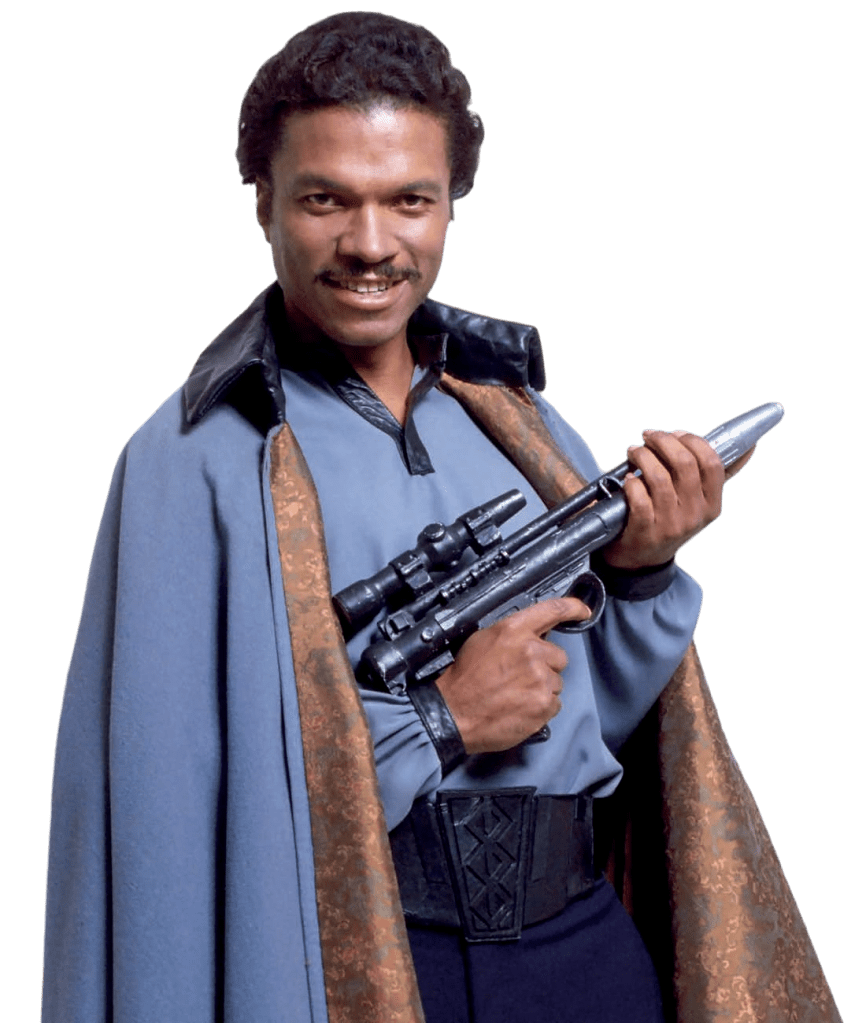
These are often referred to as the “Singlepoint Scope” or “Singlepoint Sight”, or the “Singlepoint Reflex Sight”. And yes, due to their inclusion in the films, the Star Wars “Rebel Blaster Scope”. But more on that later.
These optics came before the popular age of red dots (the first Aimpoint made in 1974/75), and far earlier than the first practical holographic sight made by Bushnell in ~1996 (The Holosight, an early version of what is now the EOTech series of sights).


Frankly the only real competitor at the time was the Oxford Lightning, also commercialized in 1969, however it was such a niche device that the two are rarely compared, as the Oxford was powered by batteries, which was considered a great liability, and the overall construction and durability, as well as general usability were not held in high regard.
The inventor of the Singlepoint scope, Nils Rüder, patented the device in the U.S. in 1969, however the invention predates this. Originally created in Sweden, it is difficult to pinpoint a true creation date.
1968 is the common (but unverified) estimate.

These devices work by keeping both your eyes open, and the reticle simply appears in front of your target. You do not see through a lens in the typical sense, hence the ‘Occluded’ sight.
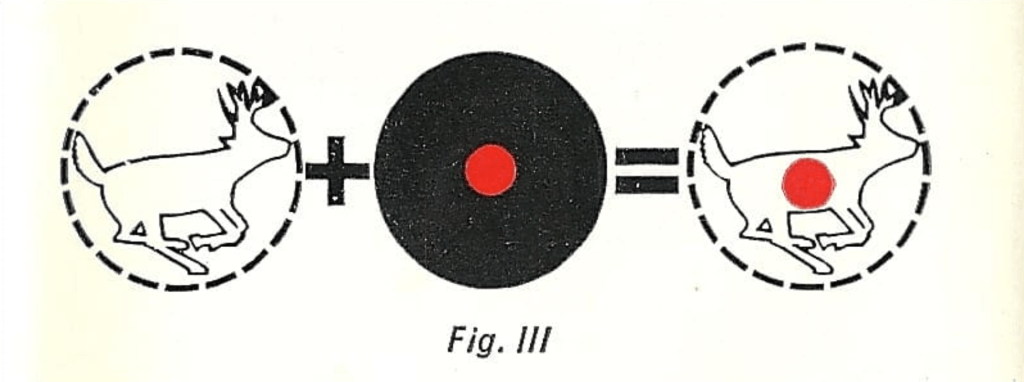
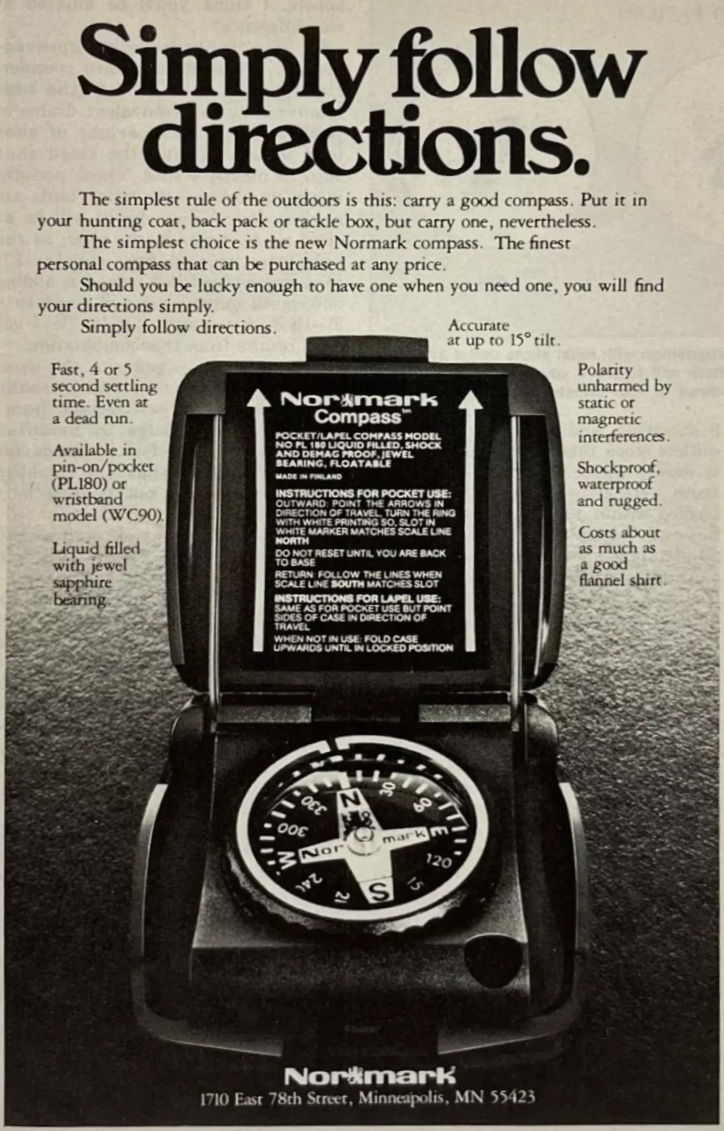
Not just a man of weapon optics, Nils continued to invent things such as Hand Compasses…
… and the RVD (Ruder Visual Device/Rear View Device). This provides a Heads Up Display to a pilot for example, while keeping the bulk of the device behind the head, piping the display in front of the eyes.

One of his most recent development efforts resulted in something highly practical, the ‘TruckView‘ non-adhesive fresnel lens.

Below is a miscellaneous fun fact about the inventor… I guess?
It will make sense as you read.
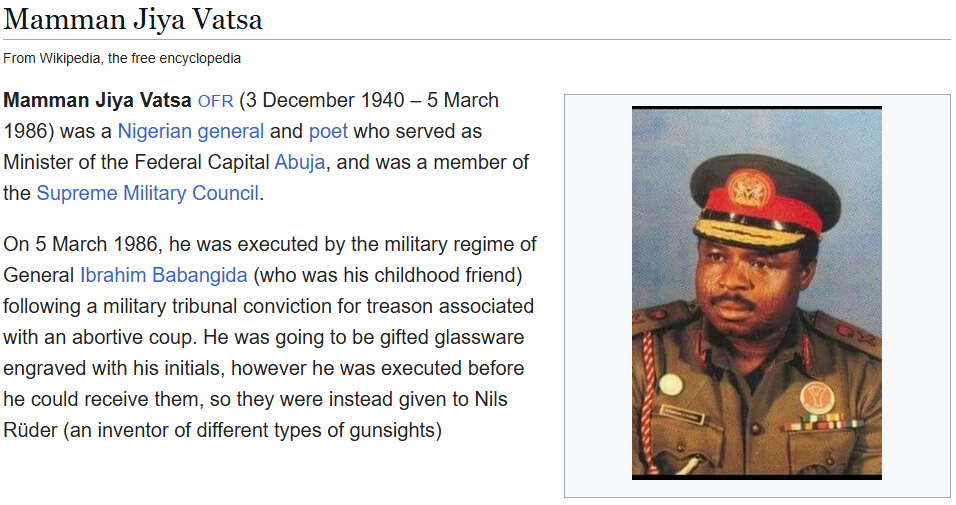
Some of the glassware is still owned by the Rüder family today.
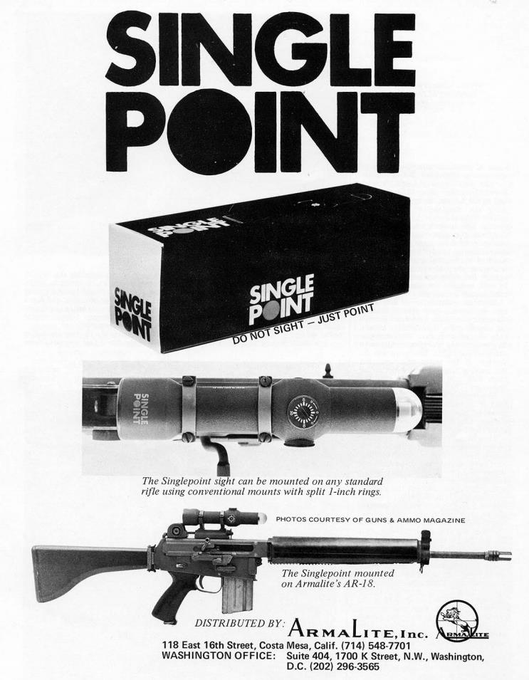
Back to the Singlepoint. These were generally red 16 MOA (!) dots and also could be seen in green, as well as larger 42 MOA reticle versions for shotgun applications. These were made for several firearms, and seemingly had unique developmental effort put towards the Metric FAL, at least initially.
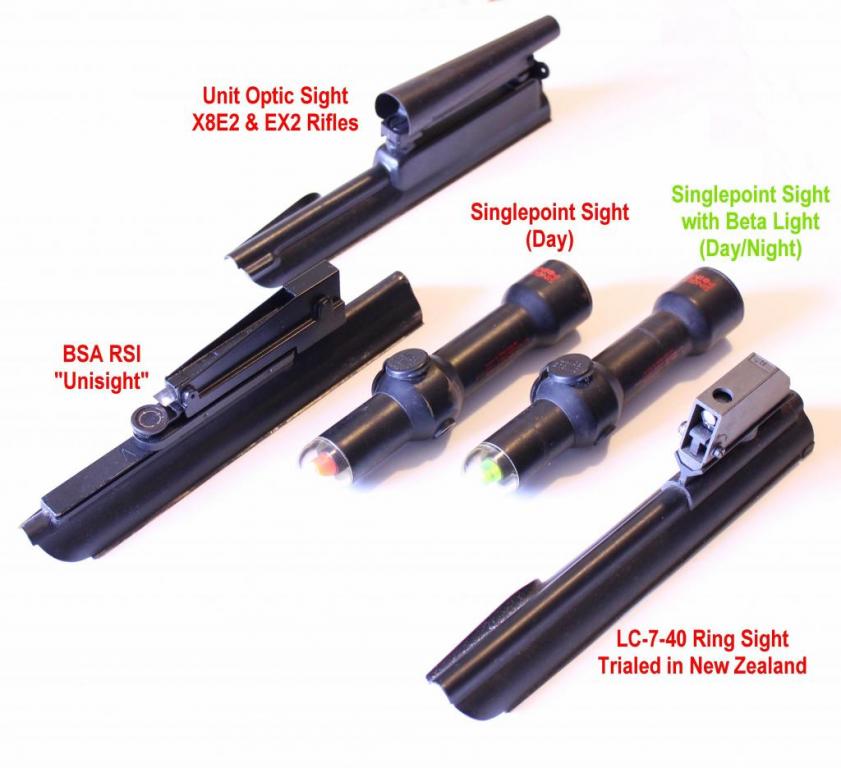
Image above not my own… but I sure wish it was

Depiction of an SP231. Source and year unknown.
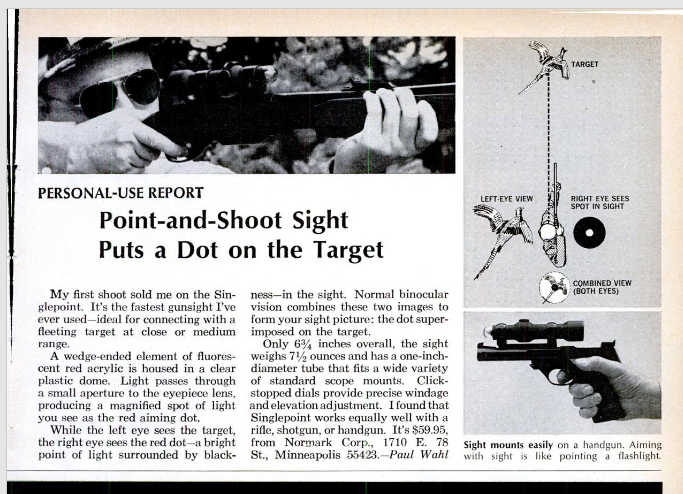
Heck, throw it on a handgun!
And we should probably get Son Tay out of the way.
It represents the vast majority of discussion regarding these optics, and took place in Vietnam in 1970 – a mission to rescue prisoners of war.
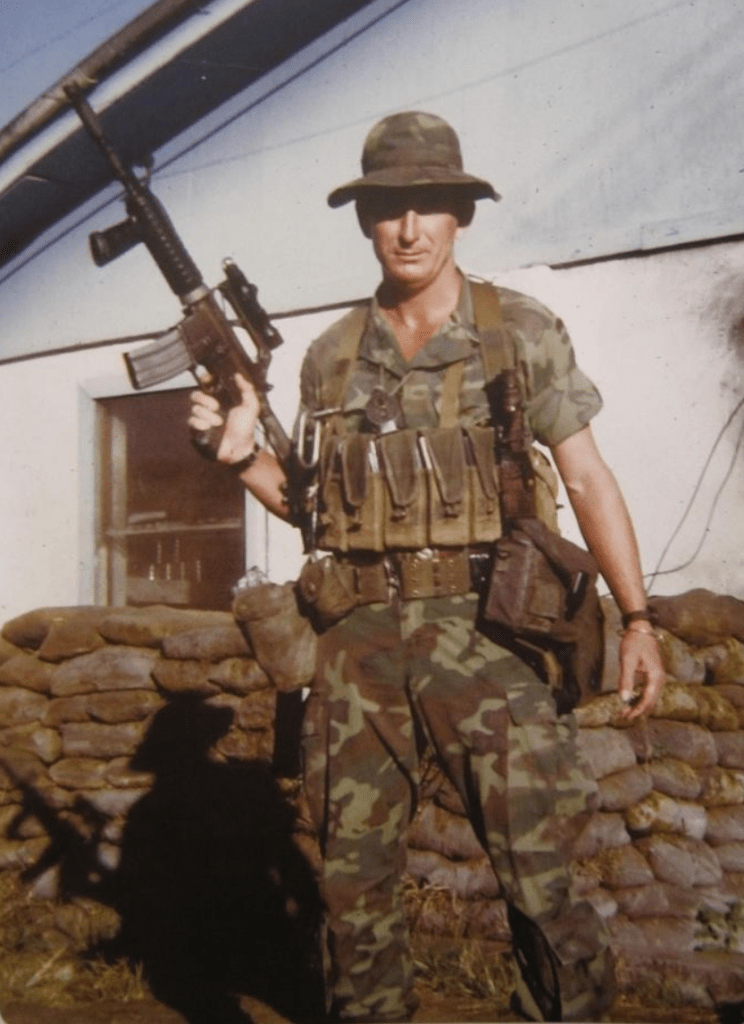
A total of 77 Singlepoint sights were acquired for the ~150 man team tasked with assaulting the prison camp. These optics were acquired in near despair, as the force was in dire need of night-fighting enhancements – they were let down by the delivery of only six hand built ‘traditional’ night vision scopes, practically still in the development stage. Only after reading of the device in an Armalite publication did they decide to acquire the first one for testing.
Aside from Vietnam, these were also used by the British during [redacted commentary about Northern Ireland] as well as Rhodesians.
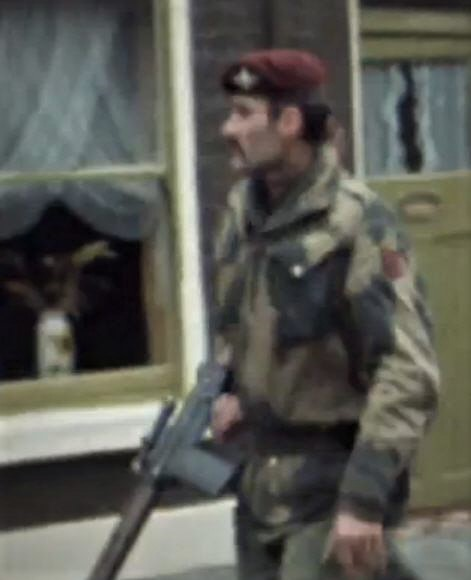
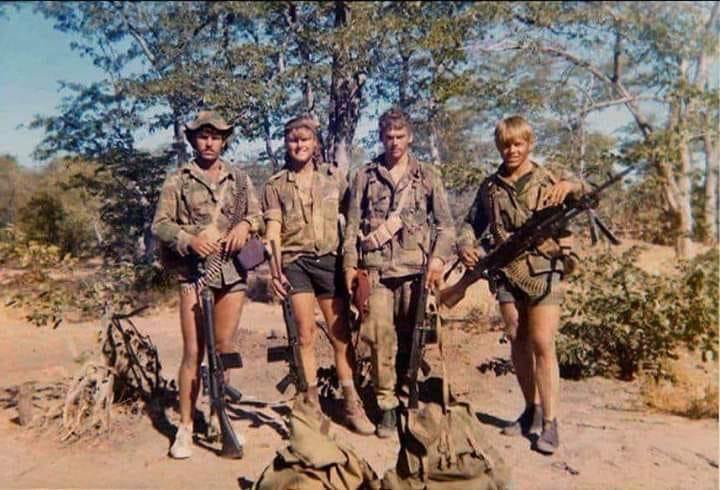
In 1970, the device had a chance to be more widely adopted by the U.K., but it appears to have met resistance.
“My Lords, […] this particular sight was found to be not advantageous compared with the current iron sight. However, I fully accept the fact that there are conditions in which this particular sight is of benefit.”
Now, the conventional dome-nosed sight was not the end of the optics history, and eventually the cone-nosed evolution was released. This is generally known as the ‘220 Series’. According to advertisements, the 220 series was developed from the ‘military small arms sight’, which combined with the rest of the marking writing indicates that the 220 series was not intended for military use. The military seems to have preferred the Day/Night units, which, if this forum thread is to be believed (which I leave up to the viewer) was rather hard to come by in the U.S.

Anyways! The 220 series was offered for just $25 in 1973 as an optic for firearms as well as air guns.
For reference, the military variants used in Son Tay were priced to the military at $50 in 1970.
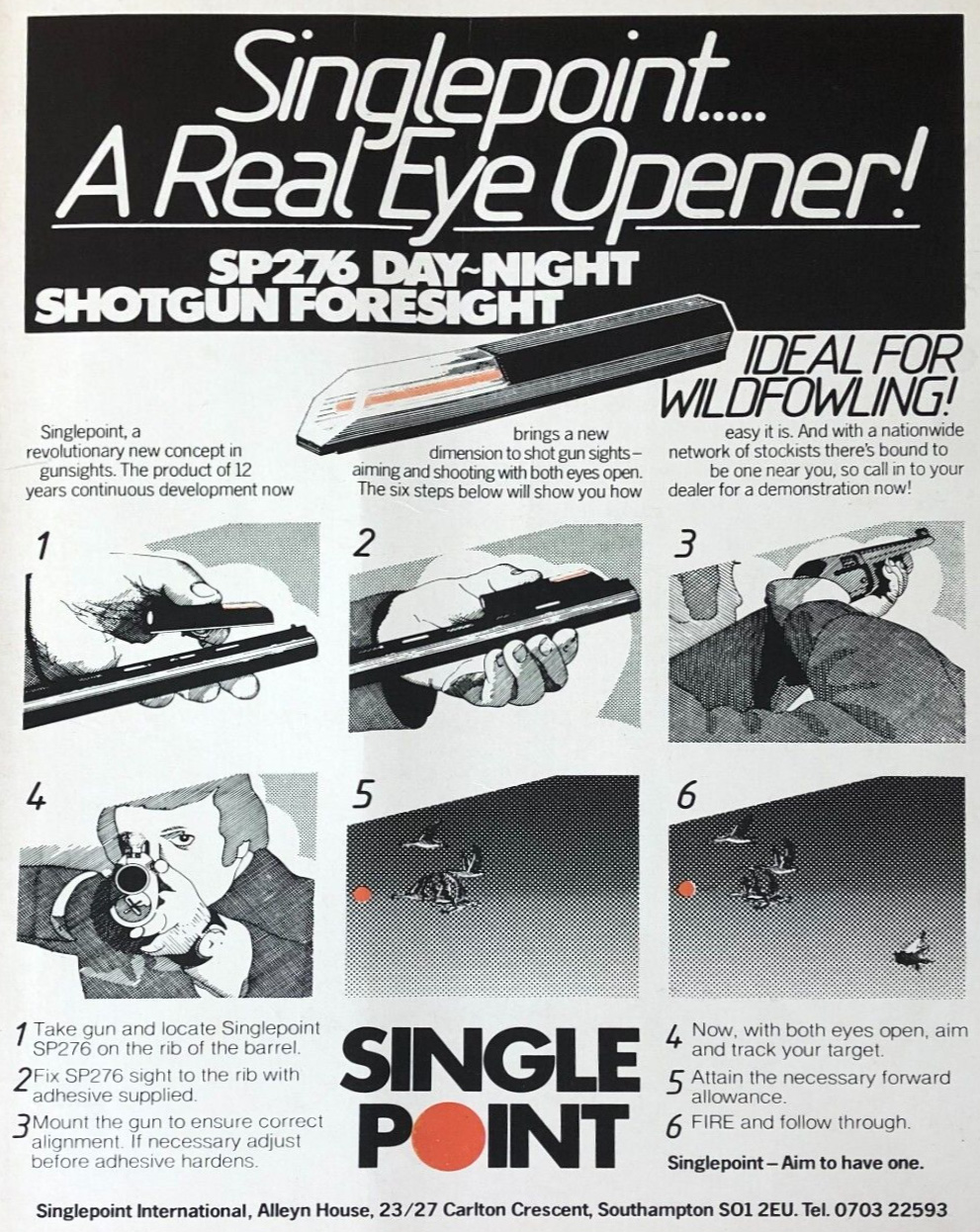
With this new generation, four different shotgun sights were offered:
SP 280 – Shotgun Beadsight
“The beadsight that really glows. Especially suitable for varmint hunting and clay shooting.”
SP 275 – ‘Low Profile’ Shotgun Foresight
“For day use on modern high-powered guns. Fits low to the gun in the natural aiming position. Particularly effective on [illegible text].”
SP 270 – Shotgun Foresight
“The original Singlepoint shotgun foresight. For day use, comes equipped with standard mount permitting you to switch it easily to another gun.”
SP 276 – ‘Low Profile ‘ Day/Night Shotgun Foresight
“The very latest Singlepoint shotgun foresight for the man who takes his shooting seriously. The day/night version of the SP 275 – ideal for wildfowling! Fits low to the gun in the natural aiming position. Permits you to operate effectively in bad light or conditions of darkness wherever you can glimpse your target.”
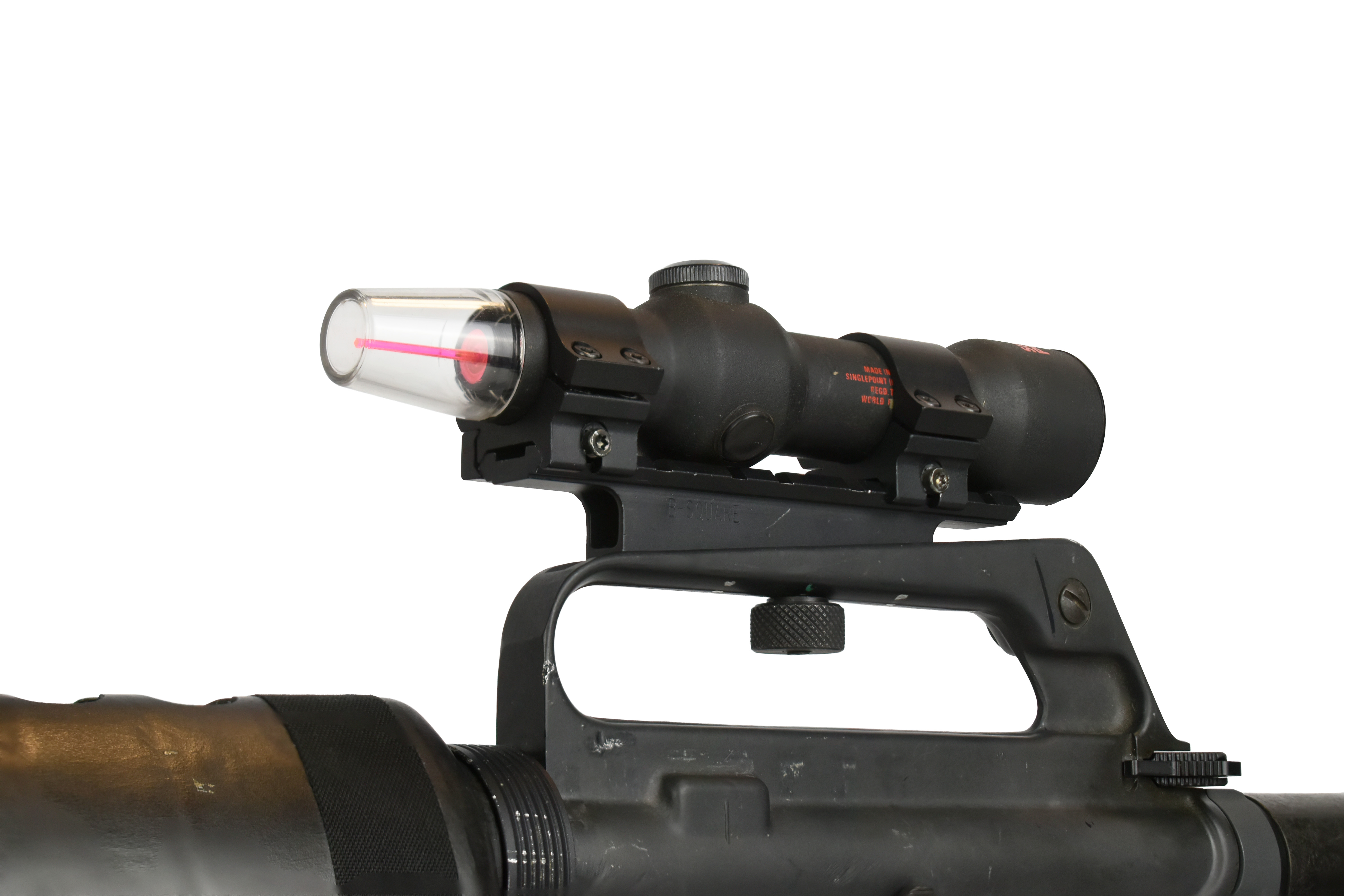
And of most interest to most of us, the SP 220 Rifle Sight.
“For close to medium range (50-150 metres) fast game shooting in daylight. Can be fitted to most rifles, including Air Guns, with standard 1″ Ring mounts.”
These devices were generally sold until 1985-ish.
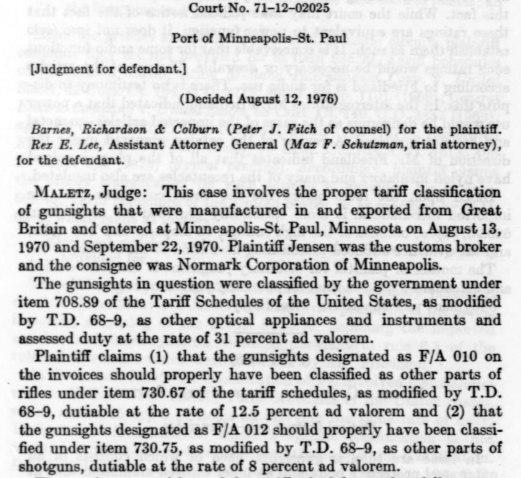
As a fun fact, Normark got into some hot legal water when importing the devices. Eventually decided in their favor, there was dispute regarding the import / tarriff classification. In this case, the inventor himself took the stand, and even called upon Richard Mastrom, a senior optical engineer employed by Honey-well, Inc. in the development of optical systems engineering at the time. It is simultaneously fascinating and boring. You want to hear about the legal definition of a prism? Eat your heart out.
The device also took part in Frankford Arsenal’s “Sight Enhancement Project” which ran from 1967 to 1975. One of 66 sights tested, the project would result in the Reflex Collimator Sight made by Frankford Arsenal in partnership with AAI corp. However, it failed to be adopted.
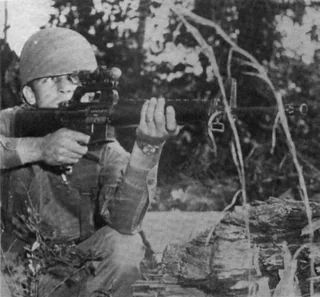
Normark, and the Singlepoint, was still listed in trade publications up until 1986. An actual end of production year is unknown. It is likely that they moved on simply due to increasing competition. Similar technology was used in the Weaver Qwik-Point (1971) and Armson OEG (1981).
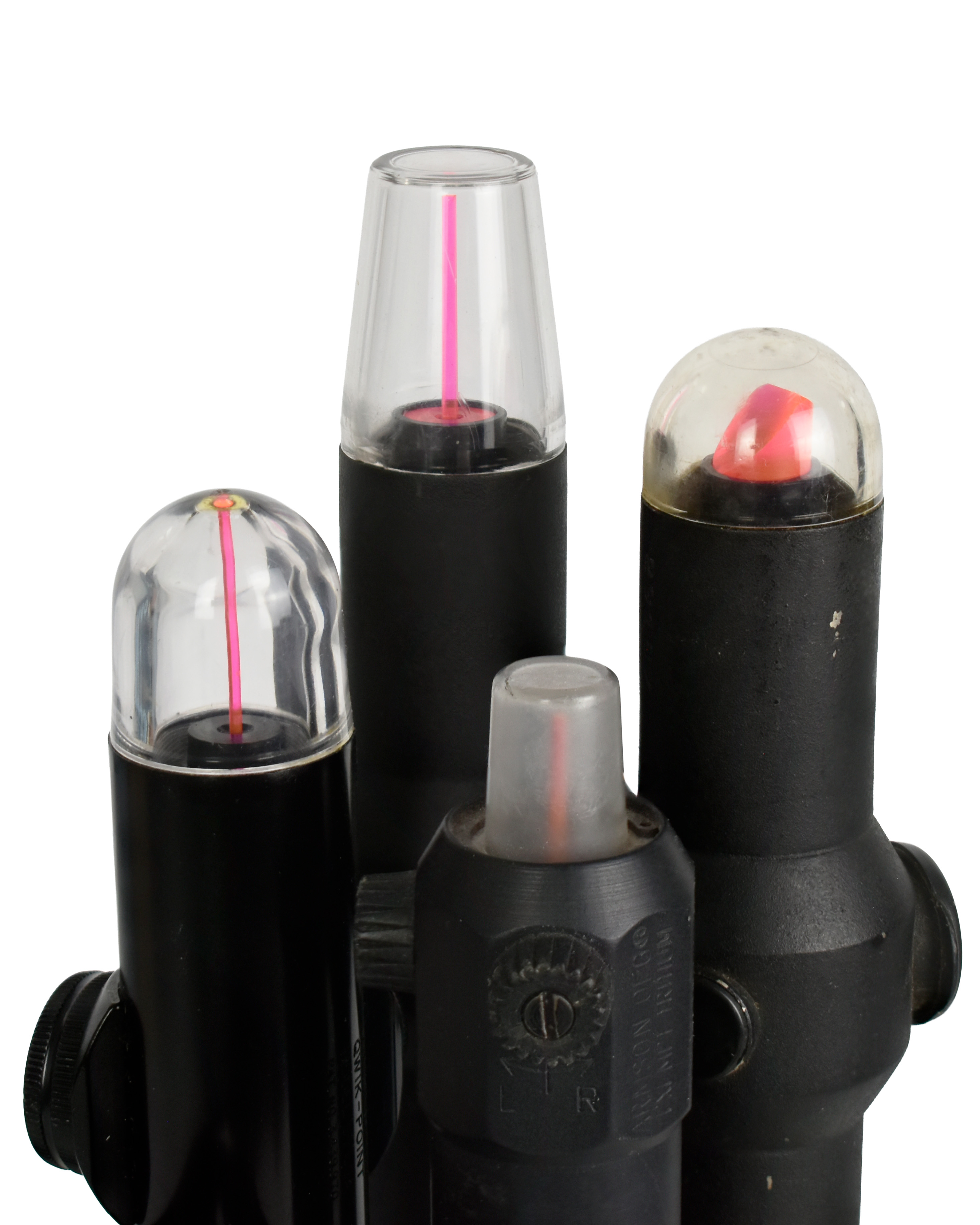
Even the Russians wanted a piece of the action, with NPZ creating the ‘Svetlyachok’ (Firefly).
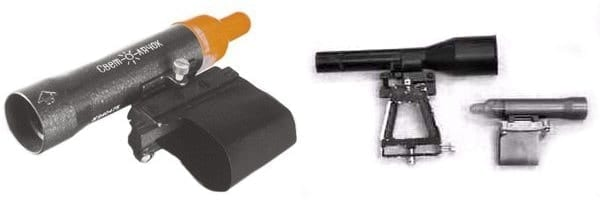
Another Russian creation, most notable for its active illumination instead of passive, is the ПОБ-1 (POB-1). These were sold in the early 90’s and originally operated on 2x ДО 06 batteries, however it will also conveniently operate on four 3V CR 1632s. The version imported into America goes by the “Eagle Aim-Pointer” moniker. This imported version runs on two 1.5V px625a batteries. Under daylight conditions, it produces a white dot, and creates an adjustable brightness red dot when powered.
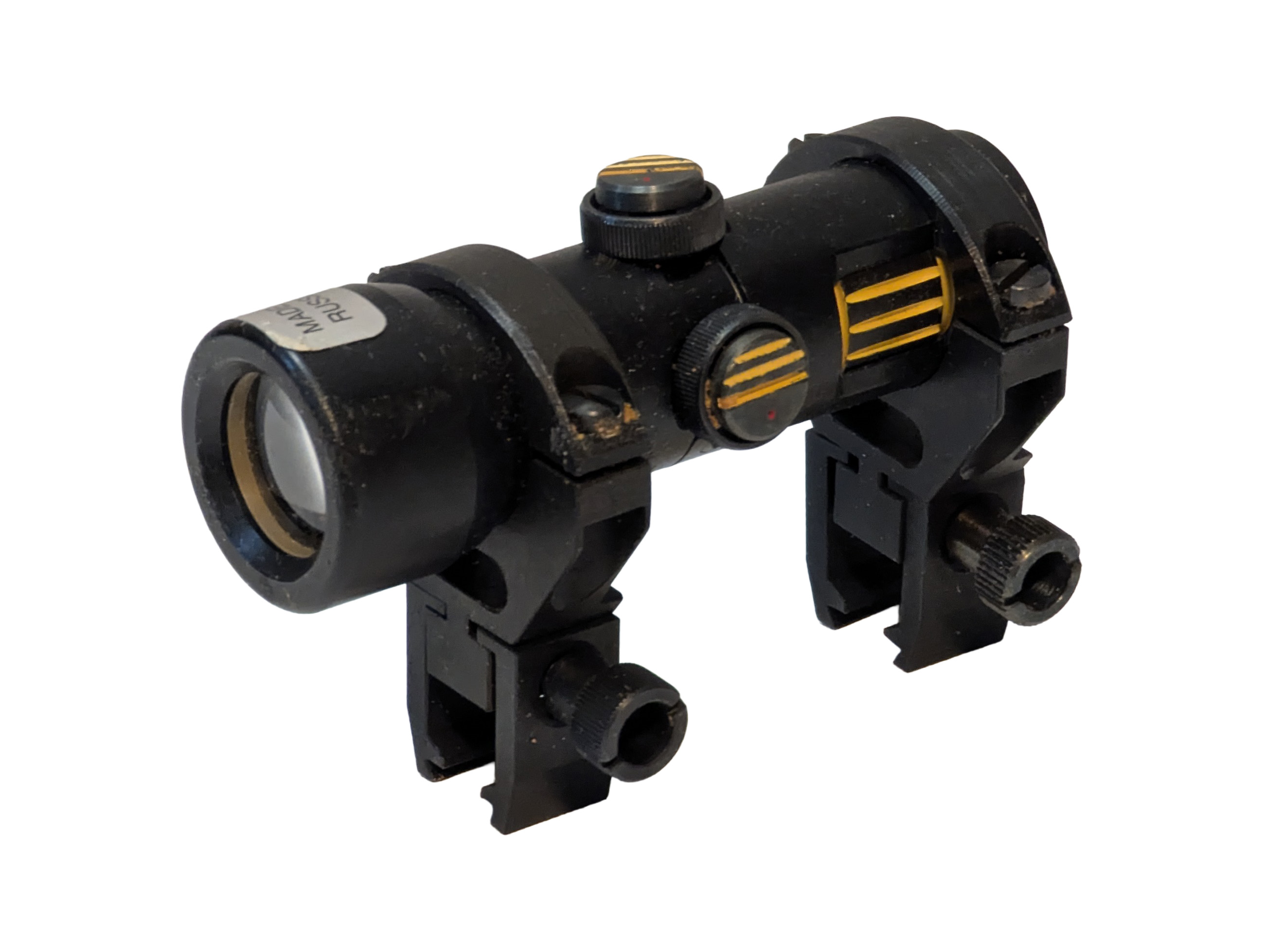


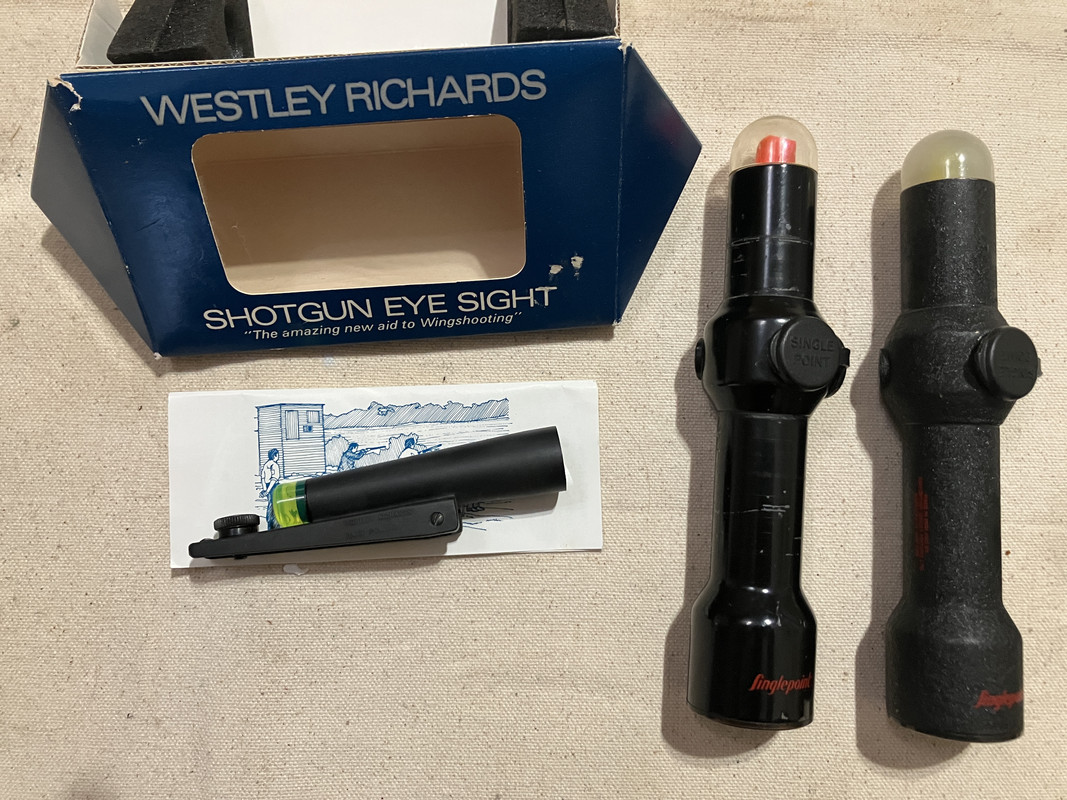
Other relevant products include the “Westley Richards Shotgun Eye Sight”, which is apparently “a rather flimsy feeling, plastic bodied OEG that attaches directly to the rib of a sporting shotgun”.
Today, Normark is still in operation, but almost entirely in regards to fishing equipment, as a subsidiary of the Rapala-Normark Group, Ltd. Singlepoint themselves unfortunately has a more tragic ending.
“In 1980, Singlepoint was defrauded when a former director used stolen designs to deliver an entire shipment to the Nigerian defense forces before the Singlepoint order was delivered to the intended owners.
Years of court cases ended in nothing. Singlepoint then restarted as Singlepoint Avionics and stuttered on for a few years before going into liquidation. Nils carried on with Singlepoint, but no factory, creating prototypes for Sig Sauer, Dynamit Nobel, FN, the British Army, but no orders were forthcoming.
Nils was really glad to get out of the arms trade in the end, and was happy that his last venture helped save lives and prevent injuries instead. He was tremendously proud of his involvement with The Raid […] and he got up to all kinds of shenanigans across West Africa, North Africa, the Philippines and lastly across Europe. He was always an inventor, not much of a businessman!“
– Excerpt from Interview conducted with primary source
Details and Features
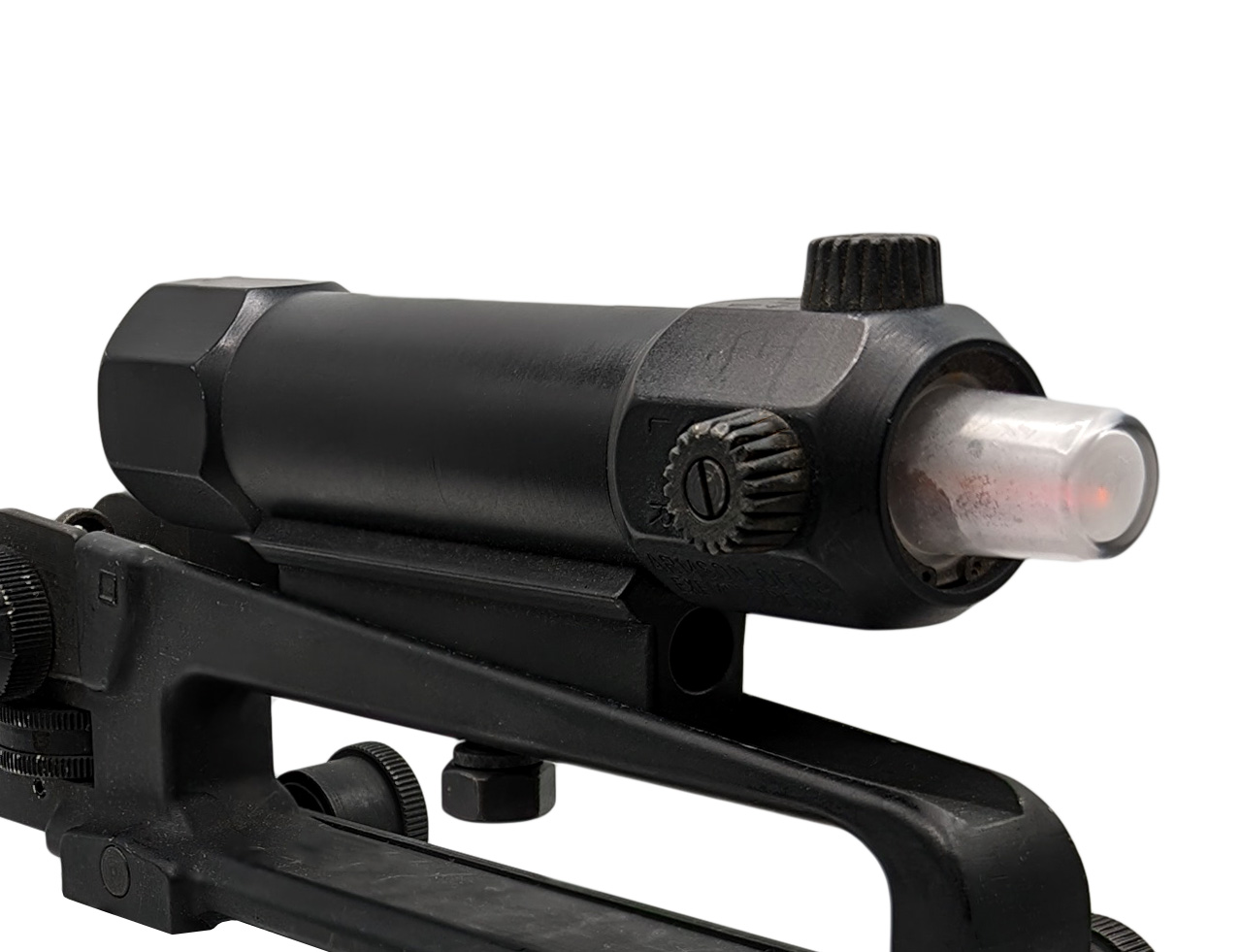
These devices are sighted not only to the gun, but to the shooter. According to the maker, ‘each persons binocular vision differs slightly, so the effects of sight alignment can vary considerably between shooters’.
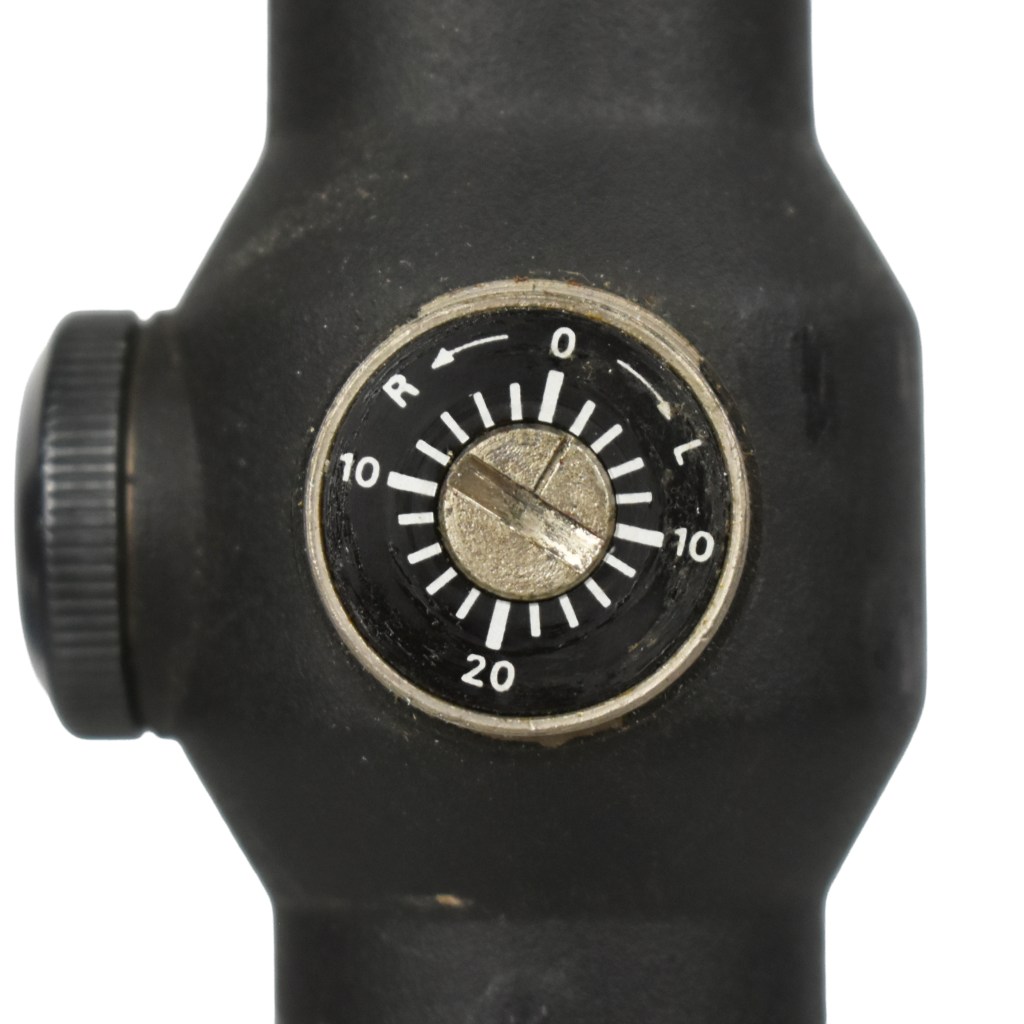
The device can be zeroed for windage and elevation using a screwdriver.
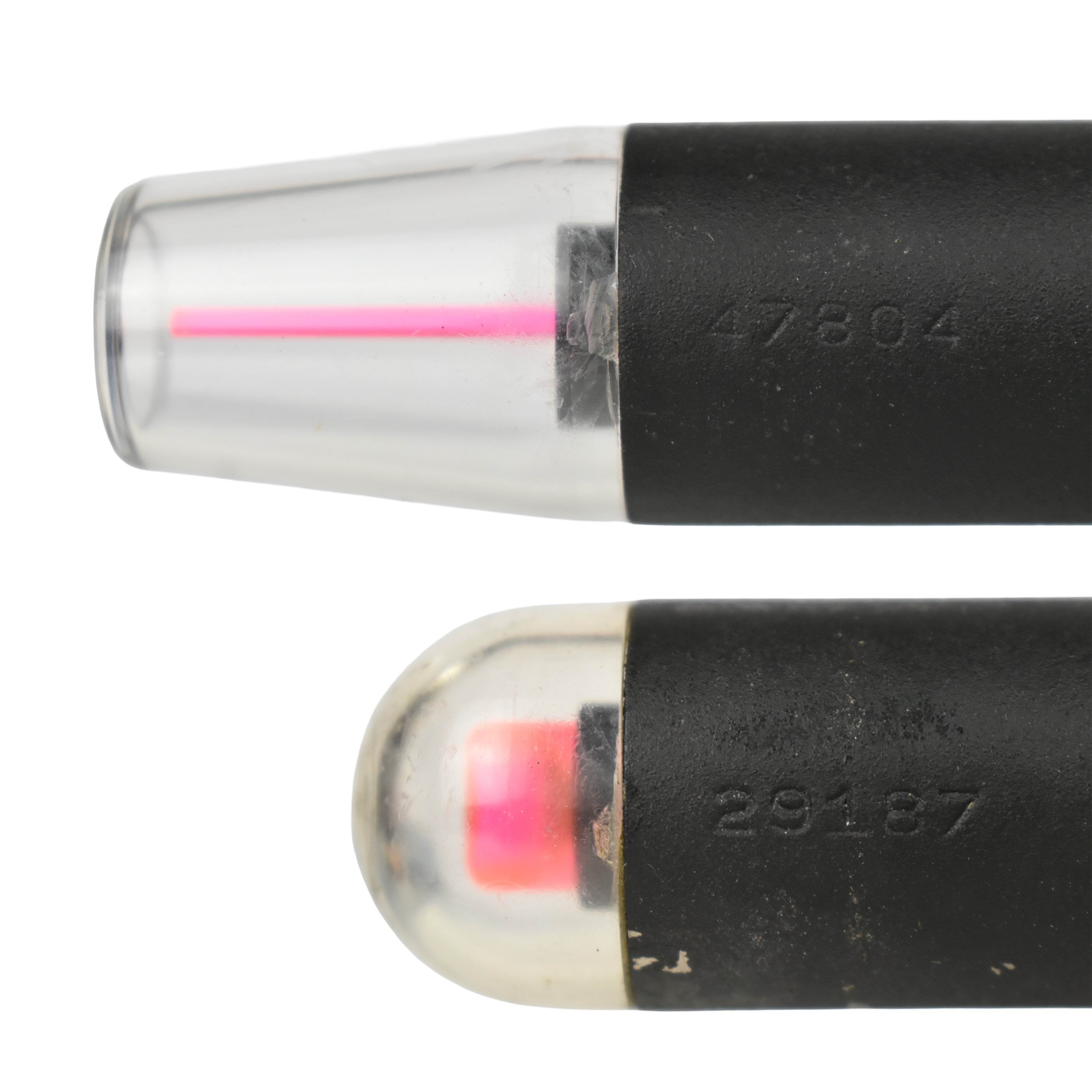
Serial numbers are marked on the side of the tube near the light collector.

The body is a combination of aluminum and steel.
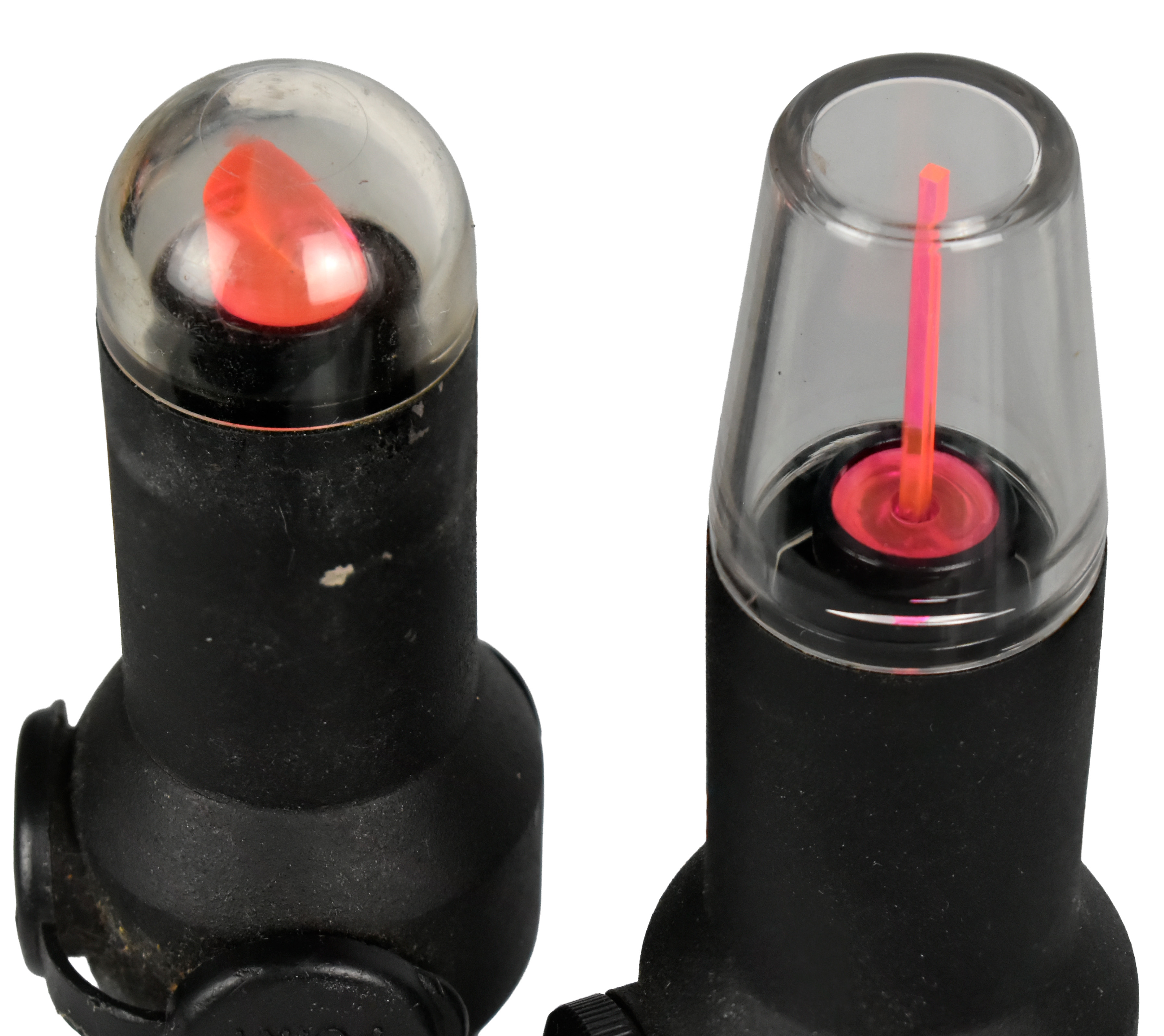
The domes are made of “unbreakable” acrylic. Some versions you may see feature frosted domes. The cone tipped sights were clear at first, and then frosted. I am unsure of a model number differentiation for those.
As far as the geometry of the light collector, the round-nosed ones sometimes feature a “Concave cone” style nose instead of the “chopped off lipstick” style. These are always seen in green, and I believe, were only available on early generation Day/Night models.
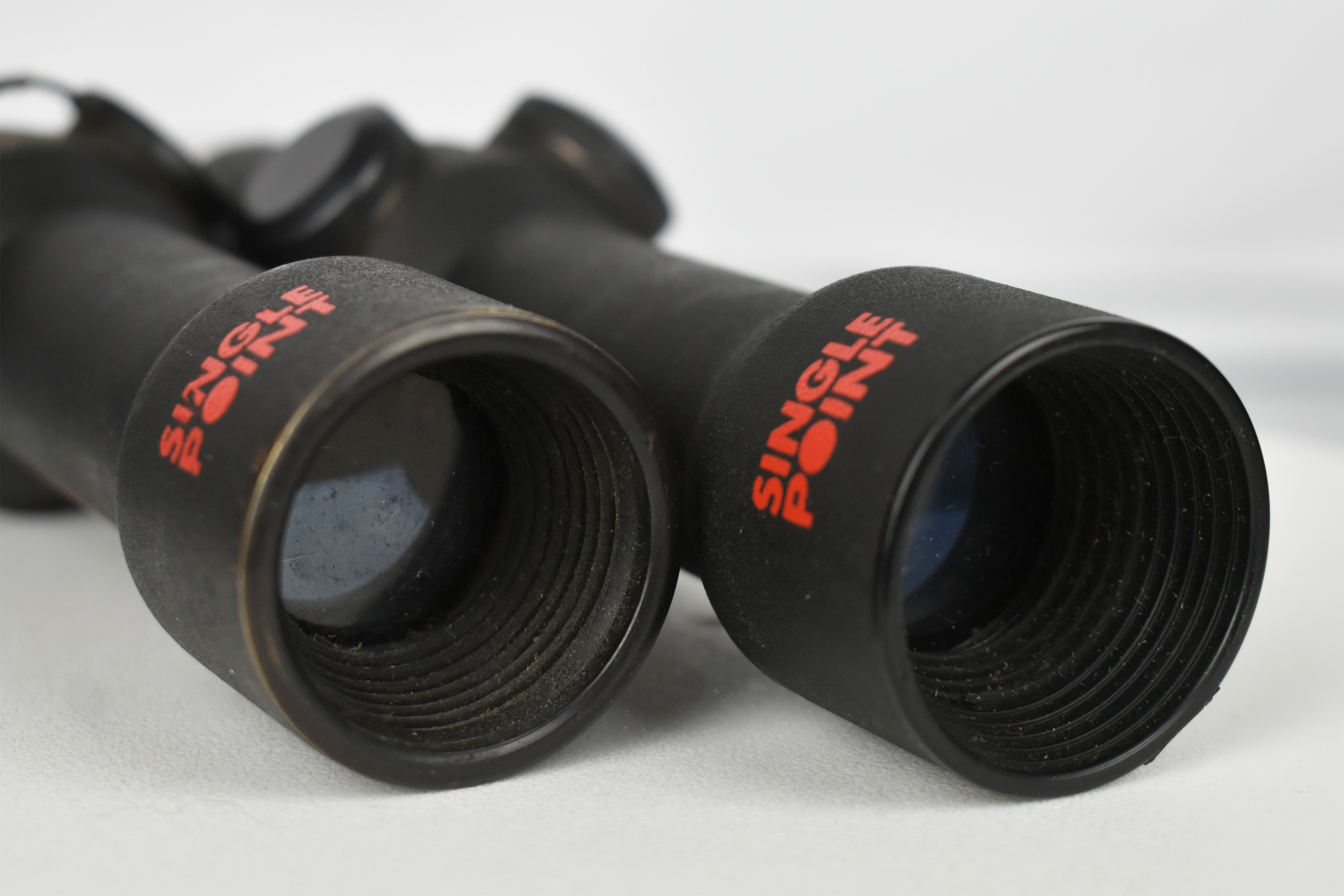
The rear of the optic has stepped cuts, possibly for anti-glare, but more likely just for ease of manufacture.
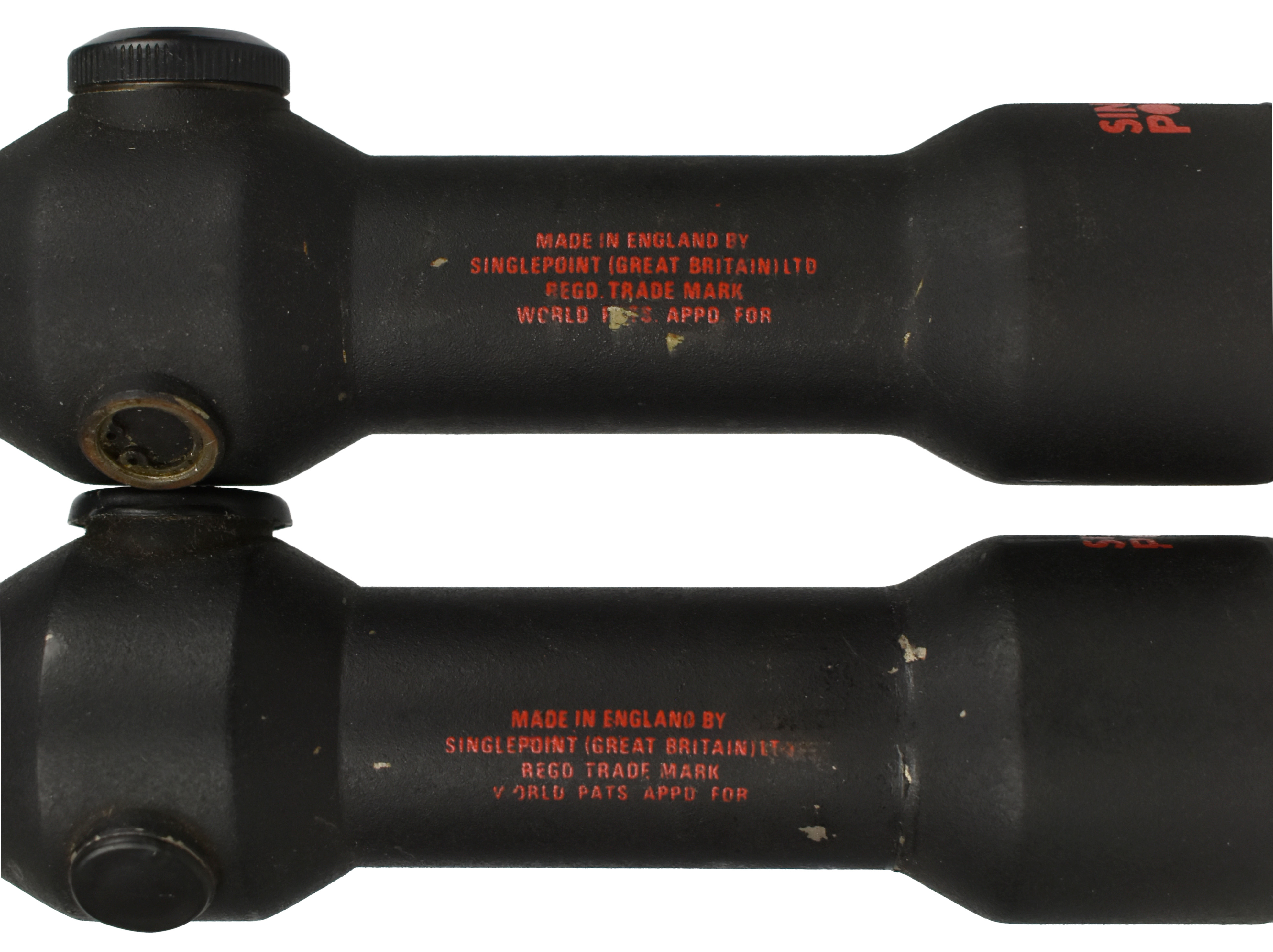
These devices were proudly made in England, no matter the version, however retailing was set up in Canada, The US, and the U.K.
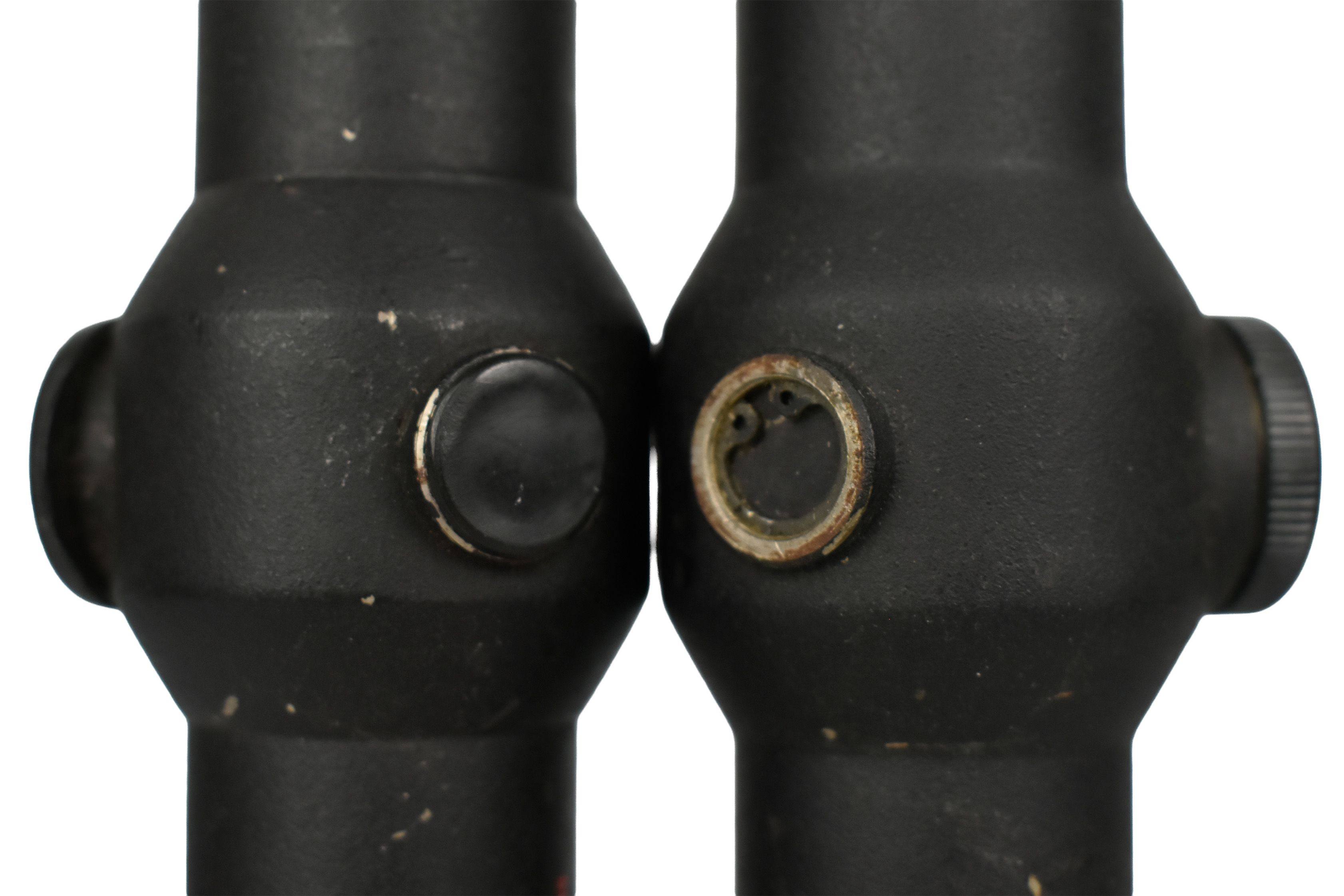
There is a sealed port used for insertion and adjustment of internal components on the underside of the device.
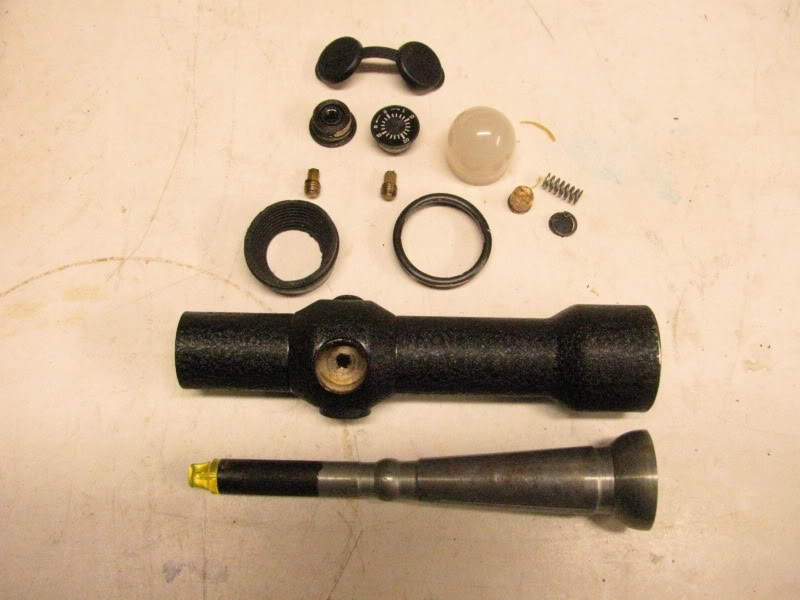
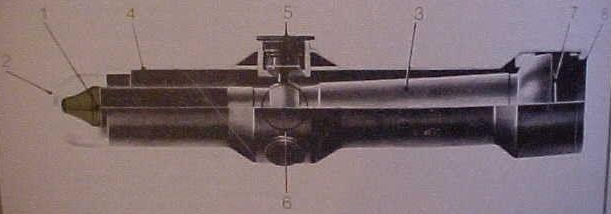
Disassembled device, credit to ‘LT John Rinney’ – Forum Link
CAD
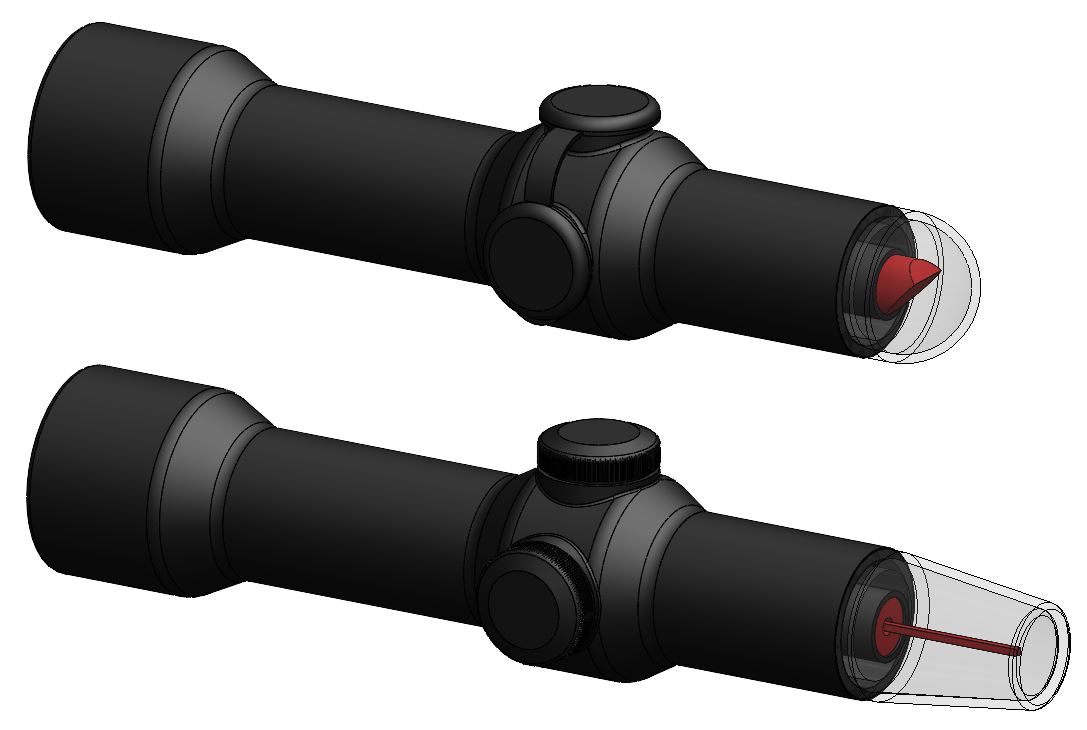
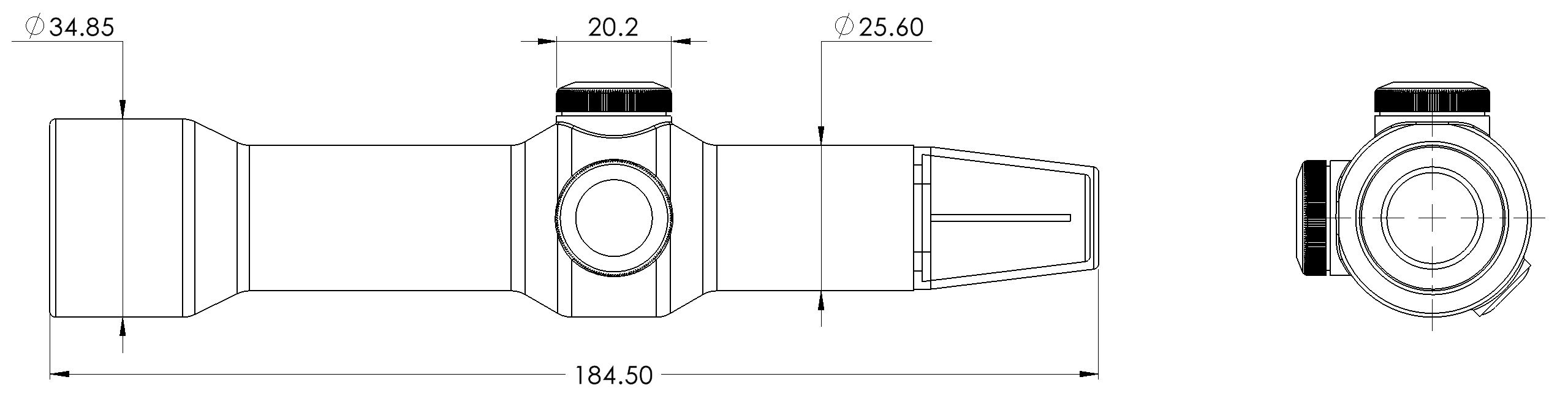
I have measured and recreated the general geometry for both models, and you can download the .Step files using the link below, for whatever reasons you may have.
Misc. Media

There is debate on whether this depicts Sierra Leone or Liberia.
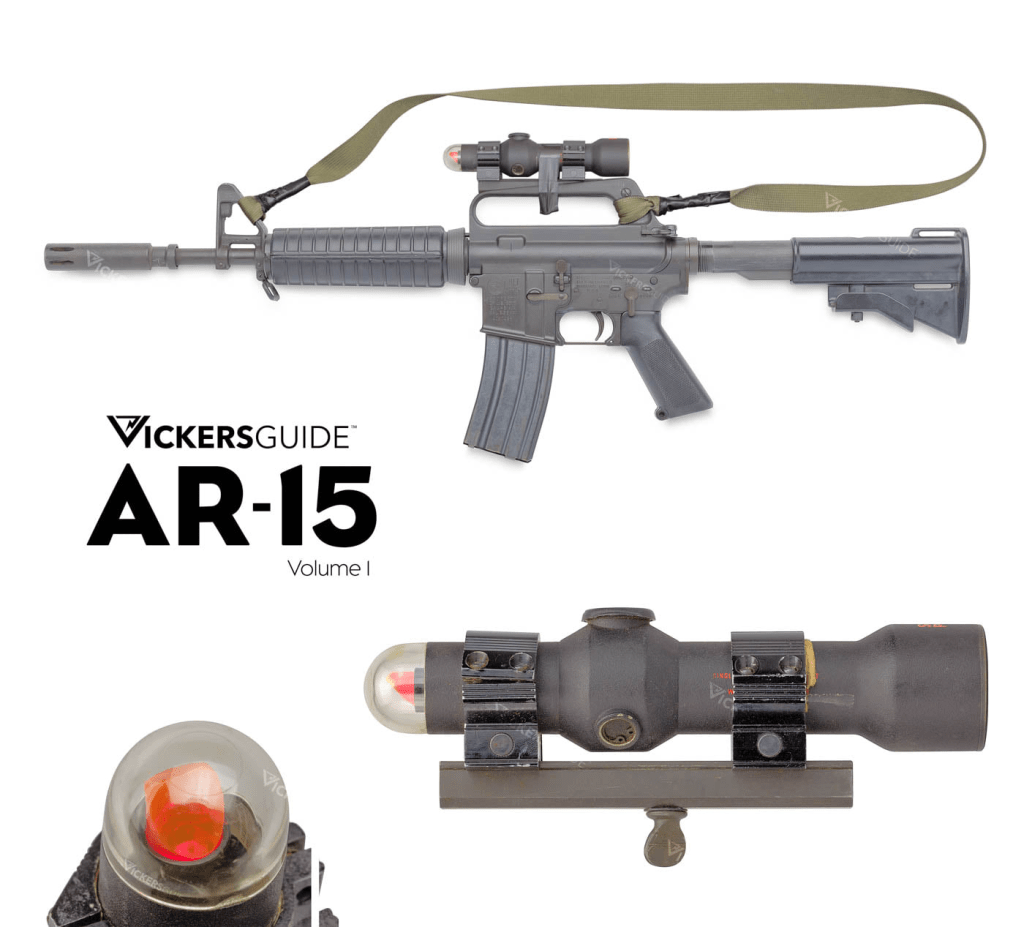
Prominent featuring in VickersGuide AR-15 Vol 1.
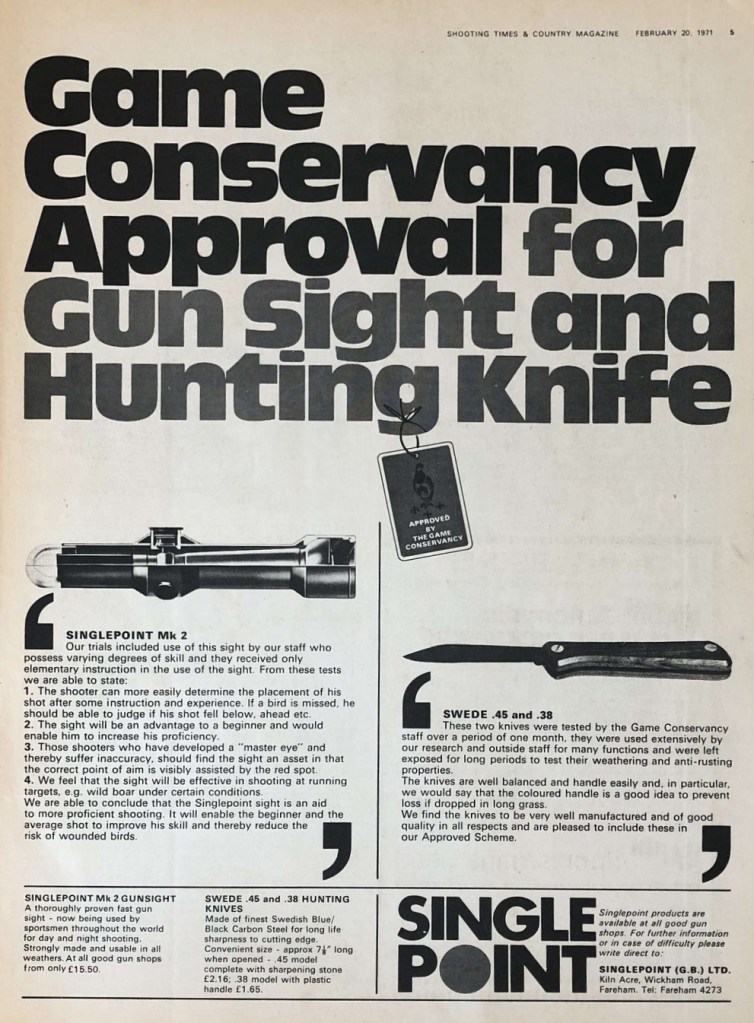
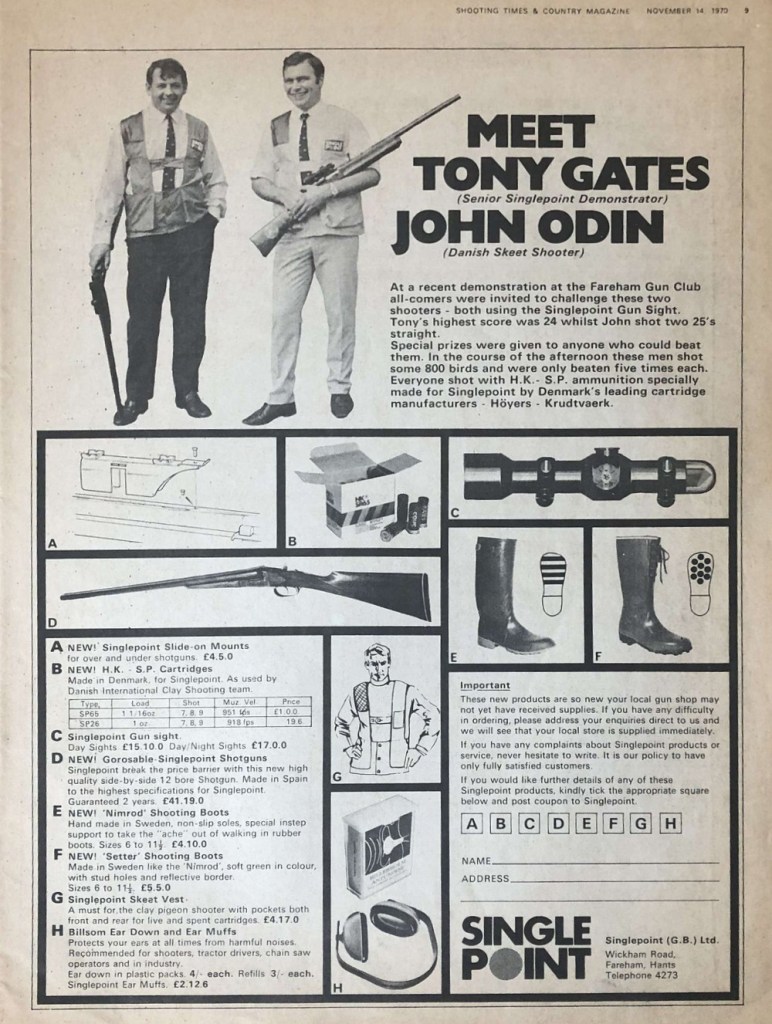
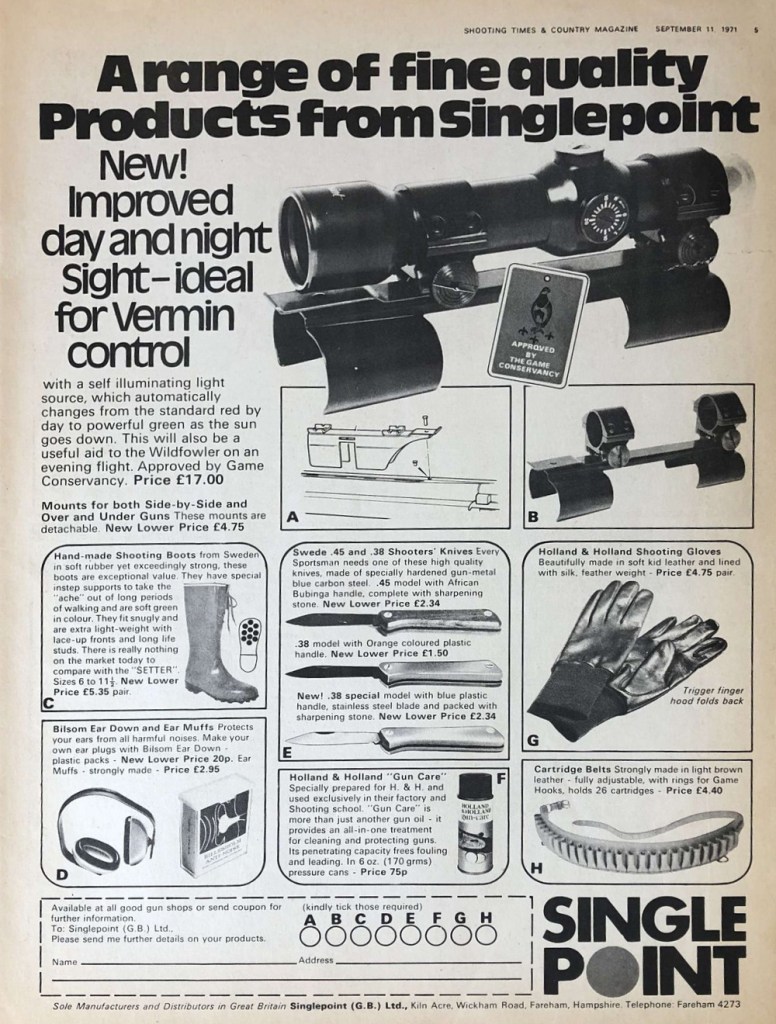
Various advertisement materials


Seen used by Ian Yule’s character in “The Wild Geese” 1989 film, using a unique offset mount. In the letters that served as reference material for the film, it is implied that the optic was still in serious consideration by the British as late as 1977, as the former SAS figure was asked to assess its performance in fighting conditions by ‘Parties Unstated’.
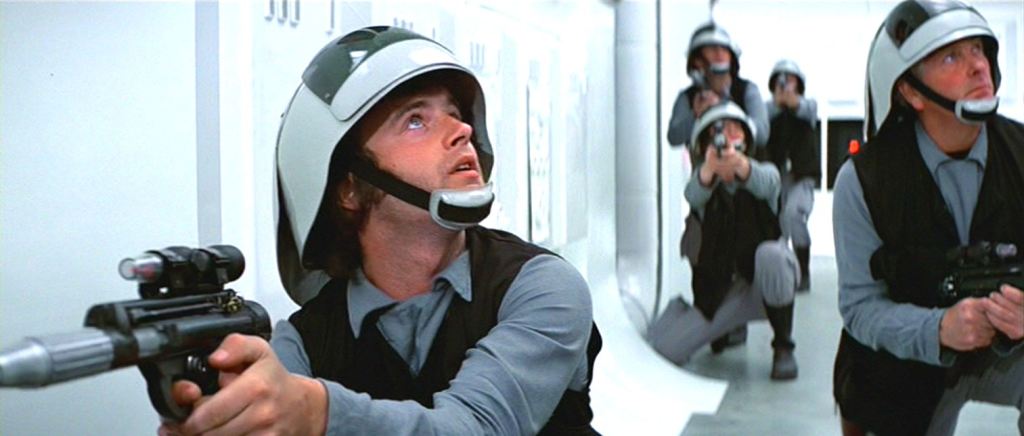
Credit where credit is due, they appear to be using the optics correctly – with both eyes open! Nice detail.
Meta, and Market
It should be known that there are airsoft / replica clones available. This is in part to the inclusion of the optic in the Star Wars films on prop guns. You might also feel inclined to purchase a kit and build a clone yourself.
Original optics are occasionally available on eBay, GunBroker, and shooters forums. They generally command a price of $350-500.
If you dare to venture to the UK eBay, you may even find a set of the shotgun sights.
Wonder what’s next? You might enjoy reading about the Armson OEG.
Citations, Resources
1973 Advertisement
Arfcom Thread regarding serial numbers and dating
Arfcom Thread regarding red vs green reticles and secondary illumination
Arfcom Thread regarding illumination sources, lots of debate
ShootingGlass.com – Probably the only other meaningful documentation done on this optic series online
‘The Raid’ – Book regarding Son Tay, with references to the optic
1976 Court Documents regarding tariff classifications
1969 U.S. Patent
Patent Search – EspaceNet
Patent Search – PRV
VietnamWar – French language forum thread
A very special thank you to the individual who assisted me with the research of this device, and its inventor.
An additional special thank you to “A_No_Where_Man” for excellent feedback on the article, which was used to improve readability and add even more context and information.

Leave a Reply